As global awareness of climate change and environmental degradation grows, sustainable travel has evolved from a niche preference into a mainstream expectation. In 2026, responsible tourism is no longer just about minimizing harm — it is about actively contributing to the well-being of destinations, local communities, and the planet. Travelers are increasingly seeking experiences that respect cultural heritage, protect biodiversity, and reduce carbon footprints while delivering meaningful connections.
This shift is driven by younger generations, technological innovations, and stricter environmental regulations across popular destinations. Sustainable travel in 2026 balances adventure with accountability, offering ways to explore the world without compromising its future.
Key Sustainable Travel Trends Shaping 2026
1. Regenerative Tourism
Beyond simply reducing negative impacts, regenerative travel focuses on leaving places better than they were found. Travelers are choosing destinations and operators that invest in ecosystem restoration, community development, and cultural preservation. Examples include volunteering for coral reef restoration in coastal areas, participating in reforestation projects in rainforests, or supporting indigenous-led conservation initiatives. This approach transforms tourism from an extractive industry into a restorative force.
2. Low-Carbon and Slow Travel
Air travel remains one of the largest contributors to individual carbon emissions. In response, many travelers are embracing slower, lower-impact journeys. Train travel across Europe and Asia is experiencing a renaissance, while domestic and regional exploration gains popularity. River cruises, cycling tours, and electric vehicle road trips are becoming preferred alternatives. Digital tools now make it easier to calculate and offset emissions accurately, with many travelers choosing verified carbon removal projects over simple offsetting.
3. Eco-Certified and Community-Based Accommodations
Hotels and homestays with recognized sustainability certifications are in high demand. Properties are adopting renewable energy, water conservation, waste reduction, and fair labor practices. Community-based tourism allows travelers to stay with local families, learn traditional skills, and ensure that tourism revenue directly benefits residents rather than large corporations. This fosters authentic cultural exchange and supports economic resilience in rural and indigenous areas.
4. Biodiversity and Wildlife-Friendly Travel
There is growing emphasis on ethical wildlife experiences. Travelers are moving away from exploitative attractions toward responsible sanctuaries, conservation-focused safaris, and citizen science programs. Destinations are implementing stricter regulations on marine activities, animal interactions, and protected area access to prevent overtourism and habitat disruption.
5. Digital Detox and Mindful Exploration
Sustainable travel also encompasses mental and cultural sustainability. Many are choosing “deep travel” experiences — longer stays in fewer places — to reduce transportation emissions and develop genuine connections. Digital detox retreats and mindfulness-based journeys are rising in popularity, encouraging travelers to engage more thoughtfully with their surroundings.
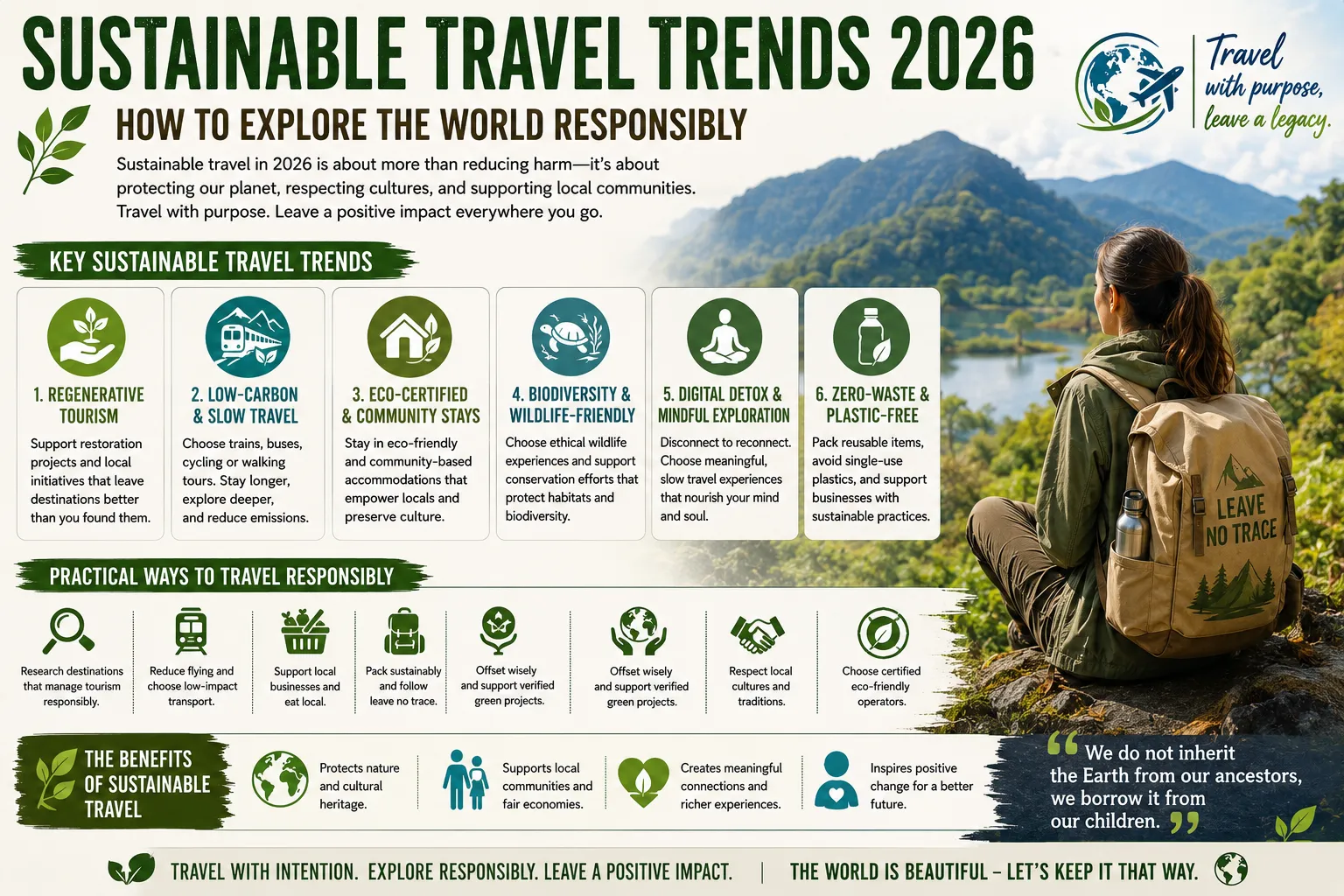
6. Zero-Waste and Plastic-Free Journeys
Travelers are packing reusable items, choosing destinations with strong waste management systems, and supporting businesses that eliminate single-use plastics. Apps that help locate plastic-free shops, refill stations, and eco-friendly restaurants make zero-waste travel more practical.
Practical Ways to Travel Responsibly in 2026
Making sustainable choices does not require perfection, but conscious decision-making. Here are actionable steps:
-
Research Destinations Thoroughly: Choose places that actively manage tourism capacity and support conservation. Avoid destinations recovering from overtourism or environmental crises.
-
Reduce Flying: Opt for direct flights when necessary, stay longer in each location, and combine multiple destinations in one trip. Consider train, bus, or boat alternatives for regional travel.
-
Support Local Economies: Eat at family-run restaurants, buy locally made souvenirs, and use local guides. This ensures money stays within the community.
-
Pack Sustainably: Bring reusable water bottles, shopping bags, toiletries in solid form, and eco-friendly sunscreen. Follow the “leave no trace” principle everywhere you go.
-
Offset Thoughtfully: Use reputable platforms that fund verified projects in renewable energy, reforestation, or community development. Better yet, reduce emissions first and offset the remainder.
-
Respect Local Cultures: Learn basic phrases, understand customs, dress appropriately, and ask permission before taking photographs of people.
-
Choose Responsible Operators: Look for certifications like GSTC (Global Sustainable Tourism Council), Fair Trade Tourism, or EarthCheck when booking tours and accommodations.
Benefits of Sustainable Travel
Responsible travel creates multiple positive outcomes. It helps preserve fragile ecosystems and cultural heritage for future generations. Economically, it provides more stable and equitable income for local populations. For travelers, it often leads to richer, more meaningful experiences and greater personal satisfaction. Many report feeling more connected to the places they visit and motivated to adopt sustainable habits at home.
Challenges and Realistic Expectations
Sustainable travel still faces obstacles. Greenwashing — where companies falsely claim eco-friendly practices — remains common. Not all destinations have the infrastructure to support responsible tourism. Budget constraints and limited options can make ideal choices difficult for some travelers.
The solution lies in continuous improvement rather than perfection. Every conscious choice contributes to collective impact. As demand for sustainable options grows, the industry is responding with better standards, transparency tools, and innovative solutions.
Final Thoughts
In 2026, sustainable travel represents a fundamental shift in how we explore the world. It moves beyond simply visiting places to becoming temporary caretakers who respect and contribute to the destinations we love. By embracing regenerative practices, reducing our footprint, and supporting local communities, we can ensure that future generations inherit a world worth exploring.
The most rewarding journeys are those that honor the places and people we encounter. As travelers, we have both the power and the responsibility to make tourism a force for good. Start small, stay curious, and travel with intention. The world needs more conscious explorers who understand that true adventure includes leaving every destination a little better than we found it.
Sustainable travel is not a trend — it is the future of meaningful exploration. By making responsible choices today, we help shape a more balanced and beautiful world for tomorrow.