
India’s tennis campaign at the Aichi-Nagoya Asian Games opens under a cloud of uncertainty even as the team looks to Sumit Nagal for leadership in singles. The seven-member contingent heading to Japan carries experience in doubles and a clear focal point in Nagal, yet the fitness of top doubles player Yuki Bhambri has cast a shadow over preparations just as the competition begins.
A Compact Squad with Clear Strengths
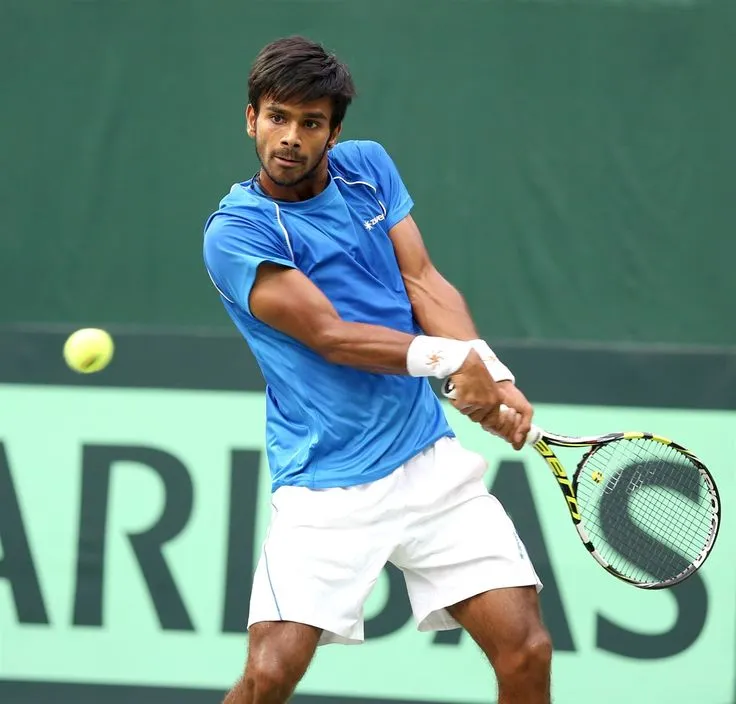
The All India Tennis Association has finalised a lean squad for the continental multi-sport event, scheduled from September 19 to October 4. Nagal stands as the primary standard-bearer in men’s singles. The 29-year-old remains India’s highest-ranked player in the discipline and brings regular Davis Cup experience since 2018. He will be expected to shoulder the bulk of the singles responsibility.
Alongside him, Dhakshineswar Suresh provides additional singles depth while also featuring in doubles. The doubles combinations form the more experienced section of the team. Yuki Bhambri, N. Sriram Balaji, Anirudh Chandrasekar and Suresh make up the men’s doubles group. On the women’s side, Rutuja Bhosale and Ankita Raina will compete in doubles. Notably, India will have no women’s singles entry after several players were left out of the final squad following a selection controversy.
This composition reflects both practical ranking realities and strategic emphasis. Doubles has traditionally been a stronger suit for Indian tennis at the Asian Games, and the current group contains players with significant tour-level experience and previous multi-nation event exposure.
The Bhambri Injury Concern
The biggest variable heading into the Games is the fitness of Yuki Bhambri. India’s most accomplished doubles specialist suffered a right thigh strain around the time of the US Open. The injury forced him out of the Davis Cup qualifier against South Korea, played on September 18 and 19 in Seoul. Although Bhambri had expressed hope of recovering in time for the Asian Games and had stated he could not see himself missing the event, his participation remains in doubt.
Bhambri reached a career-high ranking near the top 20 earlier in 2026 and was expected to form a key pairing. His absence, if confirmed, would require rapid adjustments in the doubles combinations. Balaji, a Paris Olympian, and Chandrasekar have established themselves on the circuit and spent time inside the ATP top 100. Suresh’s versatility offers further flexibility. Still, losing the team’s highest-ranked and most experienced doubles player so close to the competition is a significant setback.
Davis Cup captain Rohit Rajpal had already been forced to reshuffle combinations for the South Korea tie. A similar process may now be required for the Asian Games if Bhambri cannot recover sufficiently.
Nagal’s Central Role
With the doubles picture unsettled, attention naturally turns to Sumit Nagal. As the sole or primary singles entrant of note, he carries the responsibility of delivering results in the individual event. Nagal has shown the ability to compete against higher-ranked opponents on his day and has been a consistent presence in India’s Davis Cup sides. A strong run in Nagoya would provide a significant boost to the team’s overall medal hopes and to his own confidence heading into the latter part of the season.
Suresh’s dual role in singles and doubles adds another layer of utility. His performances in the Davis Cup earlier in 2026, including important singles wins, demonstrated his value in team settings. The combination of Nagal’s experience and Suresh’s emerging reliability gives India a functional, if not deep, singles base.
Doubles as the Primary Medal Pathway
Historically, Indian tennis has found greater success in doubles at the Asian Games. The presence of Bhosale and Raina in the women’s doubles keeps that tradition alive. Bhosale, in particular, carries recent multi-nation pedigree, having partnered Rohan Bopanna to mixed doubles gold at the previous Asian Games. Raina brings years of professional experience and competitive resilience.
On the men’s side, even without Bhambri at full strength, the available combinations possess enough quality to challenge for medals. Balaji’s Olympic experience and Chandrasekar’s steady rise provide a solid foundation. The depth that allowed India to remain competitive in Davis Cup doubles despite Bhambri’s absence will be tested again in Japan.
Selection Context and Broader Challenges
The absence of a women’s singles entry has been one of the more discussed aspects of the squad. Selection decisions left several players out of the final contingent, narrowing India’s options in that category. While doubles remains competitive, the lack of singles representation on the women’s side reduces the overall breadth of the challenge.
Tennis at the Asian Games is highly competitive, with strong entries expected from China, Japan, South Korea and other nations with greater depth and higher-ranked players. India’s path to the podium will likely depend on efficient draw management, peak performances in key matches, and the ability of the doubles pairs to maximise their experience.
Looking Ahead in Nagoya
The tennis competition forms part of a large Indian contingent aiming to build on the country’s record medal haul from the previous Asian Games. For the tennis players, the focus is narrower and more immediate: manage the fitness uncertainty around Bhambri, extract the maximum from Nagal’s singles campaign, and convert doubles experience into tangible results.
Nagal’s leadership on court will be important not only for his own matches but for the tone of the team. The doubles specialists will need to adapt quickly if pairings change. Bhosale and Raina will carry the responsibility of delivering in the women’s doubles.
Indian tennis has often punched above its weight in team and multi-nation events through resilience and tactical clarity rather than overwhelming ranking strength. The 2026 Asian Games squad will need those same qualities. With Nagal as the central figure in singles and a doubles group that still contains significant know-how, India retains realistic medal prospects—provided the injury cloud around Bhambri lifts or the remaining players step up seamlessly in his absence.
The coming days in Aichi-Nagoya will reveal whether the contingent can convert its experience and focus into podium finishes despite the early disruption.
Read more – blessandseemusic.com
