
India’s Davis Cup campaign suffered a difficult start in Seoul as the team ended Day 1 of their Qualifiers Round 2 tie against South Korea trailing 0-2. Both Dhakshineswar Suresh and Sumit Nagal showed promise by winning their opening sets but ultimately fell in three-set battles at the Seoul Olympic Park Tennis Center. The results leave India needing to win all three remaining rubbers on Saturday to keep their hopes of reaching the Davis Cup Final 8 alive.
Opening Rubber: Suresh Falls After Strong Start
The first singles match pitted India’s Dhakshineswar Suresh against South Korea’s top singles player Soonwoo Kwon. Suresh began brightly on the outdoor hard courts. He broke early and raced to a 3-0 lead before closing out the first set 6-3. His deep returns and aggressive intent disrupted Kwon’s rhythm in the early stages.
Kwon, however, raised his level. The higher-ranked Korean adjusted his serve patterns, increased width, and targeted Suresh’s backhand more effectively. He broke back in the second set and took it 6-3. In the decider, Kwon secured a crucial break in the fifth game and held firm to complete a 3-6, 6-3, 6-4 victory in just over two hours. The result handed South Korea the opening point and marked Suresh’s first Davis Cup singles defeat after an unbeaten start to his team career.
Nagal’s Determined Battle Ends in Defeat
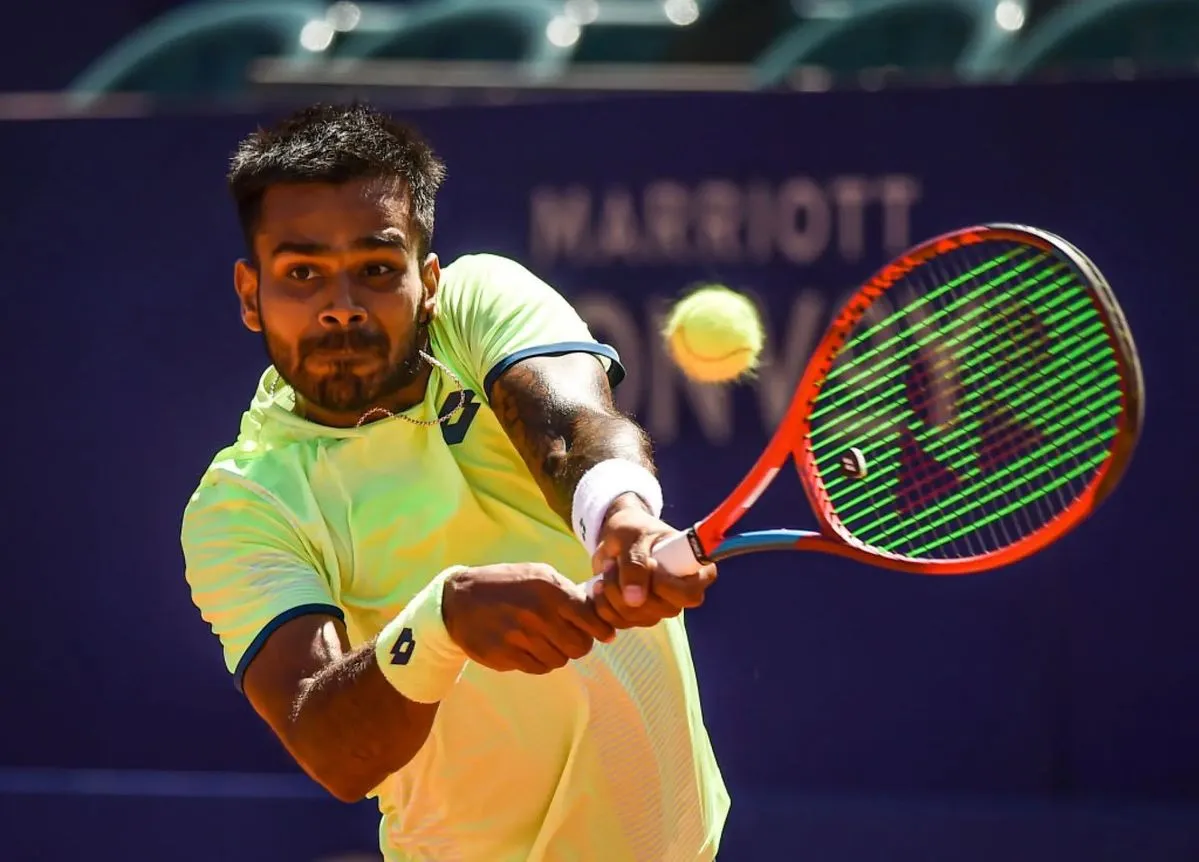
The second singles rubber featured India’s highest-ranked player, Sumit Nagal, against experienced campaigner Hyeon Chung. Chung, a former world No. 19 and 2018 Australian Open semi-finalist, has seen his ranking drop significantly due to injuries but remains a dangerous opponent on home soil.
Nagal produced an excellent start. Aggressive baseline play and solid serving helped him race to a 4-0 lead and take the first set 6-2. He continued to apply pressure in the second set and held a break advantage at one stage. Yet Chung began to find greater consistency and defensive resilience. The Korean broke late in the second set to level the match at one set apiece.
The deciding set became a tense, physical contest lasting more than three hours in total for the match. Nagal fell behind early but fought back to level the score. At 5-5 the match remained finely balanced. Chung held serve and then broke Nagal in the final game to seal a 2-6, 6-4, 7-5 win. Nagal’s effort was widely described as brave and determined, particularly given the demanding conditions and the pressure of needing a result to keep the day level.
Conditions and Match Dynamics
Both Indian players adapted reasonably well to the court surface, which was characterised by relatively low bounce and slower pace. These conditions rewarded consistency and defensive skill while making it harder to generate easy winners. Chung’s ability to absorb pace and extend rallies proved decisive against Nagal, while Kwon’s improved serving and tactical adjustments turned the first match around.
Nagal later reflected on missed opportunities, particularly in the second set, noting that failing to close out key moments shifted the momentum. He also acknowledged Chung’s defensive quality and the challenging nature of the court, describing it as somewhat “dead,” which limited attacking options.
What Lies Ahead for India
Trailing 0-2, India face a steep challenge. To win the tie and advance to the Davis Cup Final 8, the team must sweep the remaining three rubbers on Saturday: the doubles followed by the two reverse singles. Such comebacks from 0-2 down are rare in Davis Cup history and have occurred only a handful of times for India in the past.
The doubles rubber assumes critical importance. India’s pairing, expected to feature experienced campaigners such as N. Sriram Balaji alongside Niki Poonacha or another teammate, will face a South Korean doubles combination. A victory there would reduce the deficit to 1-2 and keep the reverse singles alive. Nagal and Suresh would then need to deliver in the final two matches, potentially against Kwon and Chung in reverse order.
Broader Context of the Tie
Both nations entered the second-round Qualifier with ambitions of becoming the first Asian team to reach the Final 8 under the current Davis Cup format. India arrived with momentum after earlier victories over Switzerland and the Netherlands. South Korea, playing at home, leveraged crowd support and familiarity with the conditions.
The Final 8 is scheduled for later in the year in Bologna, Italy. Qualification would represent a significant achievement for either side and a boost for Asian tennis on the global stage. For India, the path now requires near-perfect execution across three matches in a single day, testing depth, recovery and mental resilience.
Looking Forward
Despite the disappointing scoreline, the performances of Suresh and especially Nagal offered positives. Both players demonstrated the ability to compete with and initially dominate higher or more experienced opponents. The ability to win opening sets showed tactical preparedness and physical readiness. Converting those advantages into match victories remains the next step.
Captain and team support staff will focus on recovery, tactical adjustments for the doubles, and maintaining belief. Davis Cup ties are often decided by momentum shifts, and a strong doubles performance could still transform the atmosphere. South Korea, meanwhile, will look to close out the tie efficiently while remaining wary of India’s potential for a fightback.
As the second day approaches, attention turns to whether India can produce the kind of collective response required in team competition. Sumit Nagal’s lengthy battle provided a template of resilience. Translating that spirit across the remaining rubbers will determine whether India’s Final 8 hopes survive or end in Seoul. The visitors face a formidable task, but Davis Cup history has occasionally rewarded teams willing to fight from difficult positions.
Read more – todaybestoffers.info
