
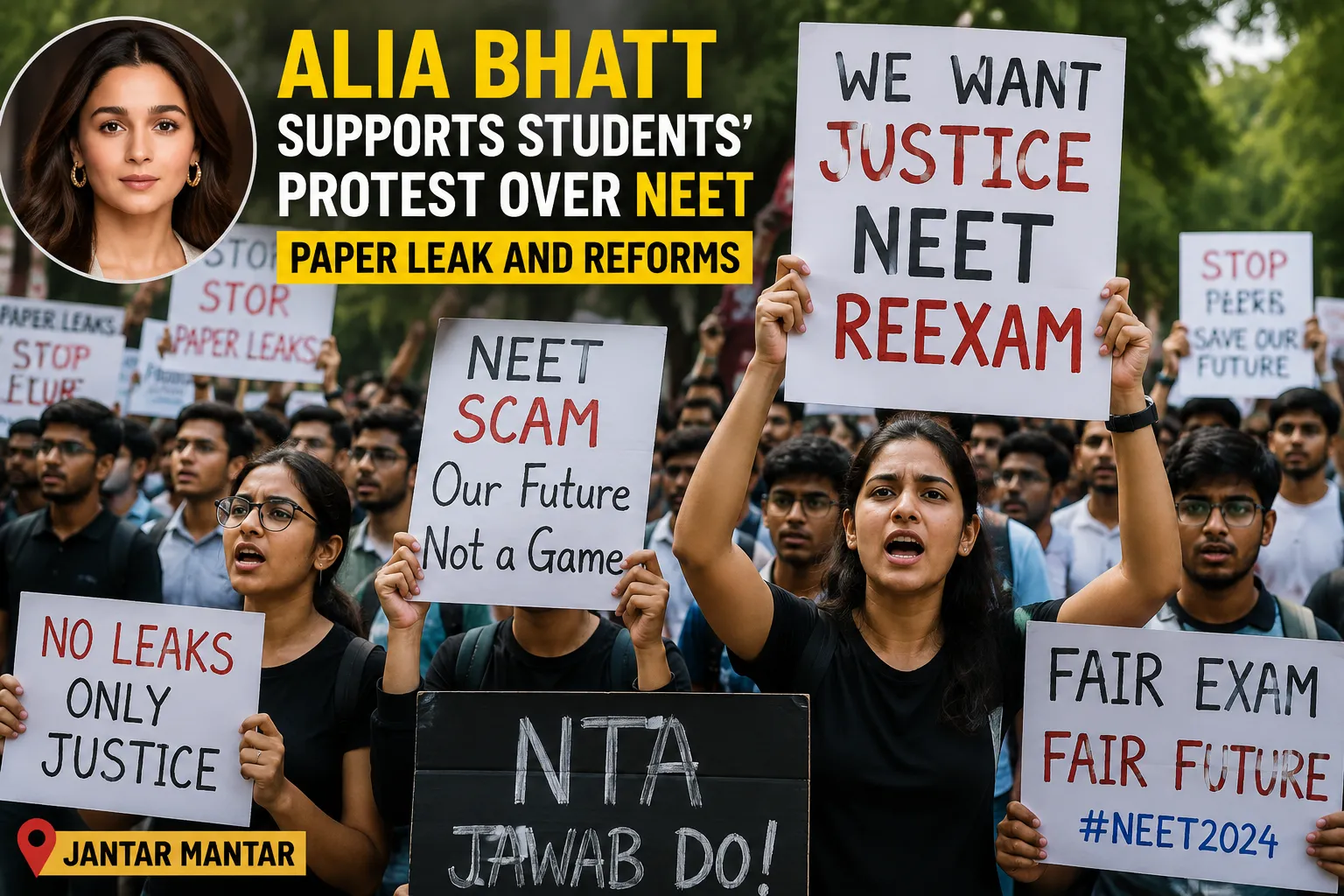
Student movements have always played an important role in shaping discussions around education, fairness, and accountability. When students raise concerns about examination systems, transparency, and future opportunities, their voices often become part of larger national conversations. Recently, actress Alia Bhatt expressed support for students protesting at Jantar Mantar over concerns related to the NEET examination controversy and broader education reforms.
Her support brought additional public attention to the students’ concerns and highlighted the growing involvement of public figures in discussions about education, examination systems, and student welfare.
The issue reflects a larger conversation about the importance of maintaining trust in competitive examinations and ensuring that students receive a fair opportunity to achieve their academic goals.
Understanding the NEET Examination Controversy
The National Eligibility cum Entrance Test, commonly known as NEET, is one of India’s most important entrance examinations for students aspiring to pursue medical education. Every year, millions of students participate in this highly competitive exam, hoping to secure admission to medical colleges across the country.
Because of the importance of NEET in shaping students’ careers, concerns related to examination transparency and fairness attract significant attention.
The controversy surrounding allegations of a paper leak and irregularities created concerns among students, parents, and education stakeholders. Many students demanded clarity, accountability, and appropriate action to protect the interests of those who appeared for the examination.
For many young aspirants, competitive examinations represent years of preparation, dedication, and personal sacrifice. Any concern related to fairness can create uncertainty and emotional stress among students.
Students Protest at Jantar Mantar
Students gathered at Jantar Mantar to express their concerns regarding the examination process and demand reforms. The protest became a platform for students to communicate their expectations about transparency, accountability, and improvements in the education system.
Student demonstrations often serve as a way for young people to bring attention to issues that directly affect their academic and professional futures.
The protesters highlighted concerns about ensuring fair opportunities for all candidates and strengthening systems that prevent irregularities in major examinations.
Their movement reflected the importance of student participation in discussions about policies that directly impact their lives.
Alia Bhatt’s Support for Students
Alia Bhatt’s message of support added visibility to the student movement. As a well-known public figure, her statement attracted attention from audiences beyond the education community.
Celebrity support can play a role in increasing awareness about social issues because public figures often have large platforms that can amplify important conversations.
By supporting students, Alia Bhatt joined a broader discussion about the importance of listening to young voices and addressing concerns related to education.
Her involvement showed how issues connected to students and education can receive attention from different sections of society.
Role of Public Figures in Social Issues
Public figures, including actors, athletes, and other influential personalities, often use their platforms to support causes they believe are important.
When celebrities speak about social issues, they can help bring discussions to a wider audience. Their involvement can encourage more people to understand the challenges faced by different communities.
However, meaningful change depends on practical actions, policy decisions, and institutional improvements.
In the case of education-related concerns, public support can increase awareness, but long-term solutions require cooperation between students, authorities, educators, and policymakers.
Why Examination Transparency Matters
Competitive examinations play a crucial role in determining educational opportunities for millions of students. A transparent and reliable examination system helps maintain confidence among candidates and ensures that success is based on genuine performance.
Students spend months or even years preparing for entrance examinations. They invest time, money, and emotional energy in achieving their goals.
Any allegations of unfair practices can affect students’ confidence and create concerns about equal opportunities.
Maintaining examination integrity requires strong systems, effective monitoring, secure processes, and quick responses to reported issues.
Impact of Examination Issues on Students
Academic pressure is already a major challenge for many students preparing for competitive exams. The uncertainty created by examination-related controversies can increase stress and anxiety.
Students often plan their future based on examination results, including college admissions, career choices, and professional goals.
When concerns arise regarding fairness, students may feel that their efforts and preparation have been affected.
This is why many students believe that addressing examination issues quickly and transparently is important for protecting their confidence in the education system.
The Need for Education Reforms
The student protests also brought attention to broader discussions about education reforms.
India’s education system continues to evolve, with increasing focus on technology, digital learning, examination improvements, and skill development.
Students and educators often emphasize the need for systems that are fair, accessible, and capable of meeting the expectations of a growing student population.
Education reforms are not limited to examinations. They also include improving teaching methods, reducing unnecessary pressure, supporting mental health, and creating equal opportunities for students from different backgrounds.
Importance of Listening to Student Voices
Students are among the most important stakeholders in the education system. Their experiences provide valuable insights into challenges that may not always be visible at administrative levels.
Listening to student concerns helps policymakers understand practical problems and develop better solutions.
Constructive dialogue between students and authorities can create opportunities for improvement while ensuring that decisions consider the needs of learners.
Student participation also encourages young people to become more aware of civic responsibilities and democratic processes.
Growing Awareness Around Student Rights
In recent years, students across different regions have become more active in raising concerns about education, examinations, and career opportunities.
Social media and digital platforms have made it easier for students to organize, share information, and connect with wider audiences.
This increased awareness has encouraged more discussions about student rights, transparency, and accountability.
At the same time, responsible communication and fact-based discussions remain important to ensure that conversations lead to meaningful solutions.
The Larger Message Behind the Movement
The support from figures like Alia Bhatt highlights a broader message: student concerns deserve attention and consideration.
Education is closely connected to the future of individuals and the development of society. Ensuring fairness and trust in education systems benefits not only students but also the country’s overall progress.
A strong education system requires collaboration between students, institutions, governments, teachers, and society.
Movements focused on improving education often reflect the hopes and expectations of young generations seeking better opportunities.
Conclusion
Alia Bhatt’s support for students protesting at Jantar Mantar over NEET-related concerns brought additional attention to an important discussion about examination transparency and education reforms.
The concerns raised by students highlight the importance of maintaining trust, fairness, and accountability in competitive examinations. While public support can help increase awareness, lasting improvements require effective policies, strong systems, and meaningful dialogue between all stakeholders.
Students represent the future of the country, and their voices play an important role in shaping a better education system. Ensuring that students receive fair opportunities and a reliable examination process is essential for building confidence and creating a more equitable future.
