For years, sulfate-based shampoos like those containing sodium lauryl sulfate (SLS) or sodium laureth sulfate (SLES) have dominated the market for their ability to produce rich, satisfying lather and deliver a deep clean. These anionic surfactants excel at removing dirt, oil, and product buildup. However, many people are now making the switch to sulfate-free alternatives in pursuit of healthier hair and scalp. While the change promises long-term benefits, it comes with an adjustment period that requires patience and realistic expectations.
Sulfates work by creating a strong cleansing action that lifts away oils and debris effectively. This power, while useful for oily scalps or heavy product users, can also strip away the hair’s natural sebum and proteins. Over time, this may lead to dryness, brittleness, increased frizz, and scalp irritation for certain hair types, especially fine, dry, curly, or color-treated hair. Sulfates can also create a negative charge on the hair shaft, contributing to static and flyaways.
For individuals with sensitive scalps, sulfates may trigger redness, itchiness, or inflammation. Those with color-treated hair often notice faster fading because the harsh cleansing removes dye molecules along with oils. Even for people without immediate issues, repeated use can gradually compromise the hair cuticle, making strands more prone to breakage and dullness.
The Transition Phase: What to Expect
Quitting sulfate shampoos rarely delivers instant silky results. Most people experience a “detox” or adjustment period lasting 2 to 4 weeks, sometimes longer depending on previous usage habits and hair type.
During the first few weeks, your scalp may feel oilier than usual. Sulfates aggressively strip sebum, prompting the scalp to overproduce oil as a protective response. When you switch to gentler cleansers, the scalp continues this overproduction initially because it hasn’t yet recalibrated. Sulfate-free shampoos, which use milder surfactants, don’t remove oils as aggressively, so hair can feel greasy or heavy at the roots. This is normal and temporary—it’s your scalp learning to balance natural oil production without constant stripping.
You might also notice less lather. Many associate rich foam with cleanliness, but lather doesn’t equal better cleansing. Sulfate-free formulas often produce smaller bubbles or less foam while still effectively removing dirt. Some users report hair feeling rougher or less shiny initially as old product buildup washes out and the hair adjusts to retaining more of its natural moisture.
Tips for a smoother transition include:
-
Washing less frequently (2-3 times per week) to allow the scalp to adjust.
-
Using lukewarm or cool water instead of hot to preserve oils.
-
Incorporating a clarifying rinse or apple cider vinegar rinse occasionally to manage any initial residue.
-
Being consistent—returning to sulfates resets the adjustment clock.
Patience during this phase is crucial. Many who push through report that after the transition, hair requires less frequent washing and feels naturally balanced.
Long-Term Benefits of Switching
Once the scalp adapts, the advantages become noticeable. Sulfate-free shampoos are gentler, helping maintain the scalp’s natural pH and reducing dryness, itchiness, and inflammation. They preserve the hair’s natural oils, leading to better moisture retention, softer texture, and reduced frizz. Curls often appear more defined and manageable, while straight hair may gain natural shine without weighing down.
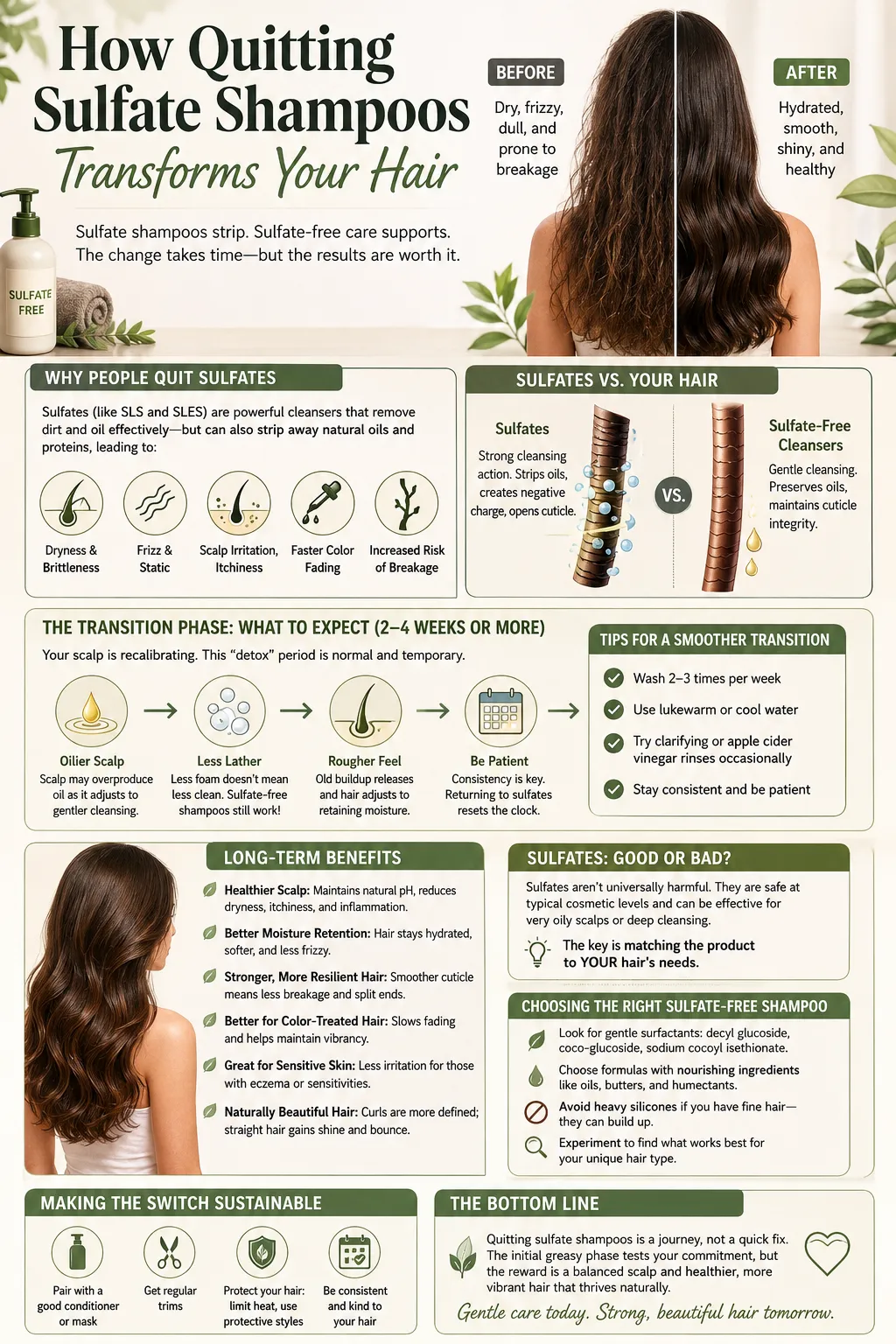
For color-treated hair, sulfate-free options slow color fading by being less aggressive on the cuticle. The smoother cuticle also means less breakage and split ends over time. People with sensitive skin or conditions like eczema often experience less irritation. Overall, hair feels healthier, more resilient, and vibrant because it isn’t constantly stripped and forced to compensate.
It’s worth noting that sulfates aren’t universally harmful. They are considered safe at typical concentrations in cosmetics, with no established links to serious health issues like cancer. Well-formulated sulfate shampoos can work well for those with very oily scalps or who need frequent deep cleansing. The key is matching the product to your hair’s needs rather than following trends blindly.
Choosing the Right Sulfate-Free Shampoo
Not all sulfate-free shampoos perform equally. Look for formulas with gentle surfactants like decyl glucoside, coco-glucoside, or sodium cocoyl isethionate. Quality options often include nourishing ingredients such as oils, butters, or humectants to support hair health. Avoid overly heavy silicones if you have fine hair, as they can build up without strong cleansers.
Experimentation may be needed to find the best match. Those with curly or coily hair often benefit significantly, as do individuals with processed or damaged strands. For fine or oily hair, lighter sulfate-free formulas paired with proper technique (focusing on the scalp during washing and lengths when conditioning) yield good results.
Making the Switch Sustainable
Transitioning successfully involves adjusting your overall routine. Pair sulfate-free shampoo with a matching conditioner or mask to replenish moisture. Regular trims help manage any transitional damage, and protective styles or heat minimization support recovery.
Ultimately, quitting sulfate shampoos isn’t about demonizing one ingredient but about listening to your hair. For many, the result is hair that looks and feels healthier long-term—less frizzy, more hydrated, and resilient. The initial greasy phase tests commitment, but the payoff is a more balanced scalp and vibrant hair that reflects your natural biology rather than fighting against it.
With consistent care and realistic expectations, ditching sulfates can mark the beginning of a more harmonious relationship with your hair. The process teaches that true hair health often comes from gentleness and patience rather than aggressive cleansing.