The United States Central Command has announced that American forces have cleared sea mines from the international shipping lanes of the Strait of Hormuz, declaring the critical waterway open to commercial traffic. In an operational update, CENTCOM Commander Admiral Brad Cooper stated that mines laid months earlier by Iran’s Islamic Revolutionary Guard Corps have been removed from the established transit routes. The multi-month effort involved Navy divers, Navy SEALs and air power drawn from the Army, Navy, Air Force and Marine Corps.
“The circumstances were challenging and dangerous, to say the least, but we got the job done,” Cooper said. “Bottom line, today, international shipping lanes are open and momentum is building.”
A Strategic Waterway Under Pressure
The Strait of Hormuz is one of the world’s most important energy chokepoints. Before the current conflict, more than 20 million barrels of oil per day typically passed through the narrow passage that links the Persian Gulf to global markets. Roughly one-fifth of the world’s seaborne oil supply normally transits the strait, making any disruption a matter of immediate concern for energy prices and supply security.
Mines placed in the internationally recognised Traffic Separation Scheme created a persistent hazard for commercial vessels. The presence of these weapons, combined with broader hostilities, sharply reduced shipping volumes and forced operators to weigh the risks of transit. Clearing the main lanes was therefore viewed by US commanders as essential both to restoring commercial flows and to reducing Iran’s ability to threaten global energy shipments through asymmetric means.
The Clearance Operation
According to Cooper, US forces worked meticulously and quietly over several months to locate and neutralise the mine threat. The operation combined specialised underwater capabilities with supporting air assets. Navy divers and SEALs conducted the high-risk work of identifying and rendering safe the devices, while aircraft from multiple services provided surveillance, protection and coordination.
The cleared routes form part of the strait’s established traffic separation scheme, which organises vessels travelling in opposite directions through the confined waterway. By focusing on these internationally recognised lanes, commanders aimed to restore a usable corridor for commercial shipping while maintaining broader military operations in the region.
US officials described the mission as completed for the primary transit routes. Some assessments circulating among allies had earlier suggested that not every mine in the wider area may have been accounted for, with previous estimates of devices in the historic shipping lanes ranging higher. American officials characterised those figures as outdated and maintained that the international lanes themselves are free of the Iranian-laid threat.
Protecting Commercial Traffic
While the clearance work proceeded, US forces also provided coordinated protection to commercial vessels already transiting the strait. Cooper reported that American personnel assisted nearly 1,500 ships over recent months. Those vessels carried nearly 750 million barrels of crude oil destined for global markets.
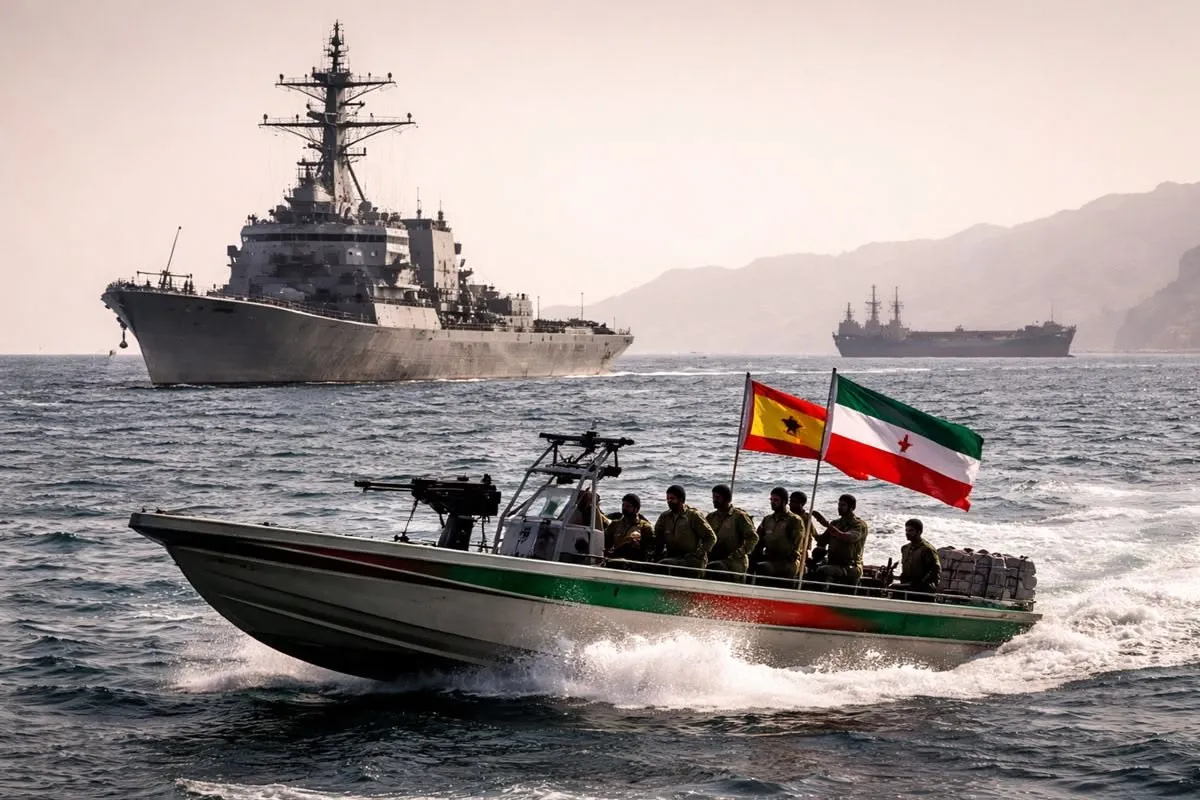
The protective effort formed part of a larger US military presence in the region. Roughly 50,000 American troops have been involved in operations that include both the facilitation of legitimate commercial shipping and the enforcement of a naval blockade against Iran. More than 20 warships and hundreds of aircraft have supported the dual mission.
Parallel Blockade of Iranian Ports
Alongside the mine-clearance and transit-protection work, US forces have maintained a naval blockade of Iranian ports that resumed in mid-July. According to CENTCOM, no ships have entered or left Iranian ports without authorisation during this period, with exceptions limited to humanitarian cases. Iran has been unable to export oil from its shores under these restrictions.
US forces have turned back approximately 75 vessels that attempted to breach the blockade and disabled three that failed to comply with orders. The blockade is intended to increase economic pressure on Tehran while the United States simultaneously works to keep the strait usable for non-Iranian commercial traffic.
Traffic Remains Below Pre-Conflict Levels
Despite the official declaration that international shipping lanes are open, commercial activity through the Strait of Hormuz has not returned to pre-war volumes. Shipping data indicate that the number of commodity vessels transiting on recent days has remained modest—sometimes in the single digits or low teens—compared with the 100 to 130 vessels that typically moved through the waterway each day before the conflict began in late February.
Oil flows likewise remain a fraction of the more than 20 million barrels per day that once passed through the strait. Industry participants and maritime advisers continue to urge caution. Residual security concerns, insurance considerations, and the practical challenges of restarting schedules after prolonged disruption have kept many operators measured in their approach even after the mine-clearance announcement.
Broader Context and Lingering Caution
The clearance of the main lanes removes a major and visible hazard that had constrained shipping. Yet the overall security environment in and around the strait remains complex. US forces continue to monitor for any attempt to reintroduce mines, with senior officials stating that vessels engaged in new minelaying would face immediate consequences. Space-based and other surveillance assets are also described as part of the ongoing watch.
International maritime advisers and commercial operators have noted that confidence will rebuild gradually. Demonstrated safe passage over successive days and weeks, combined with clear communication of residual risks, will influence how quickly traffic volumes recover. Allies have generally welcomed the progress while emphasising the need for sustained vigilance.
Significance for Energy Markets and Regional Stability
The Strait of Hormuz has long occupied a central place in calculations of global energy security. Any sustained restriction on its use raises prices, complicates supply planning and amplifies geopolitical risk premiums. By clearing the primary transit routes and simultaneously constraining Iranian oil exports, US commanders have sought to achieve two objectives: reduce the immediate mine threat to commercial shipping and maintain pressure on Tehran’s revenue streams.
Whether these steps translate into a durable increase in commercial traffic will depend on continued security, the absence of new threats, and the willingness of shipowners, charterers and insurers to resume more normal operations. For now, CENTCOM’s assessment is that the international shipping lanes are open and that momentum is building. The coming weeks will test how fully the market responds to that declaration.
The operation underscores both the difficulty of mine countermeasures in a contested narrow waterway and the strategic importance the United States attaches to keeping the strait functional for global commerce. With the main lanes declared clear, attention turns to whether commercial volumes can rise meaningfully while broader military and diplomatic efforts continue.
Read more – Instantdua.com