India is taking a significant step toward integrating the true wealth of its oceans into national economic measurement. The Ministry of Statistics and Programme Implementation has released a concept paper outlining an experimental methodology to compile monetary asset accounts for marine fish resources. By assigning a rupee value to fish stocks found in coastal waters and within the country’s exclusive economic zones, the initiative aims to capture natural capital that has long remained outside conventional economic indicators.
This effort is grounded in the United Nations System of Environmental-Economic Accounting, an internationally accepted framework that links environmental data with economic accounts. It represents a shift from treating oceans primarily as sources of extractable resources toward recognising them as assets whose condition, productivity and long-term value must be tracked systematically.
Why Natural-Capital Accounting Matters for the Blue Economy
India ranks as the world’s second-largest fish producer and accounts for roughly eight per cent of global production. In a recent financial year, total fish output reached nearly 20 million metric tonnes, with the marine sector contributing a little over four and a half million metric tonnes. The country’s coastline stretches more than 11,000 kilometres and its exclusive economic zone covers more than two million square kilometres. These vast marine spaces support livelihoods for millions, generate export earnings and hold potential for a blue economy projected to reach 100 billion dollars by 2030.
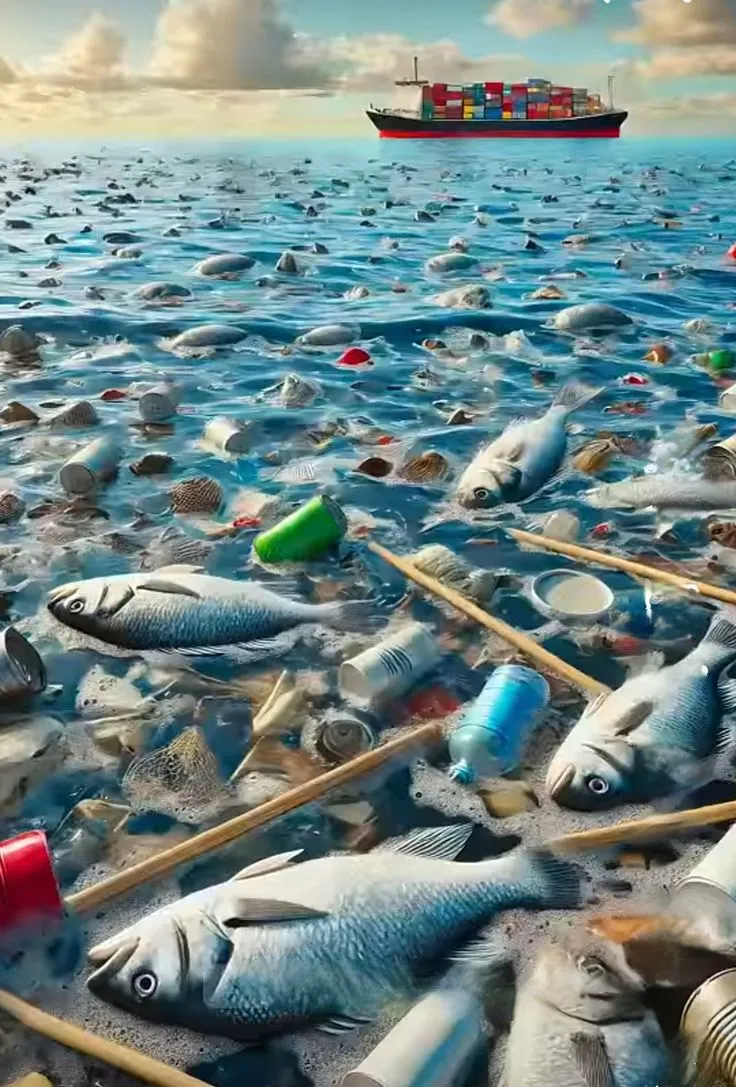
Conventional national accounts focus on flows of production and income. They do not fully record the stock of natural assets that underpin those flows. When fish populations decline through overfishing or climate stress, the loss does not appear as a reduction in national wealth. Natural-capital accounting seeks to correct this omission by treating commercially, economically or ecologically important marine fish species as assets that can appreciate or depreciate over time.
The accounts can also illuminate trade-offs among competing uses of marine space. Fisheries, ports, tourism, offshore energy and coastal development often compete for the same areas. Integrated economic and environmental data make those choices more transparent and support better decisions about whether to expand fishing capacity, invest in stock restoration or pursue deep-sea opportunities.
The Proposed Valuation Method
The concept paper proposes estimating the monetary value of fish resources through the net present value of expected future resource rents. Resource rent is the economic surplus generated by a natural resource after deducting all production costs, including labour and capital. It represents the true economic contribution of the resource itself.
Future rents are projected over the estimated asset life of each stock and then discounted at a proposed real rate of two per cent. The resulting figure becomes the estimated present value of the economic benefits the stock is expected to generate. Physical accounts tracking the quantity and condition of stocks are combined with these monetary estimates to produce a complete marine fish asset account.
Stocks are classified according to their status by comparing current landings with historical maximum levels. Categories include developing, exploited, overexploited, rebuilding and collapsed. Asset lives are then assigned accordingly: longer periods for stocks considered sustainably managed and shorter periods for those under greater pressure. This differentiation reflects the reality that not all fish populations offer the same long-term economic potential.
Climate Risk and Sustainable Management
Climate change adds urgency to the exercise. Rising sea temperatures, ocean acidification and shifting currents affect fish distribution, productivity and survival. By linking physical stock data with monetary values, the accounts can help estimate the economic cost of climate-induced changes in marine resources. Policymakers will gain a clearer picture of how environmental pressures translate into losses or gains in national wealth.
The information can also guide strategic choices. NITI Aayog has estimated substantial resource potential in the exclusive economic zone, including deeper waters that remain under-utilised. At the same time, certain stocks are vulnerable to overexploitation. Accounting systems that reveal whether current harvesting generates genuine long-term wealth or is simply drawing down natural capital will help determine the right balance between expansion and conservation.
India’s work builds on earlier efforts in environmental-economic accounting. The country has already compiled physical accounts for forests, land, minerals and water. Ocean ecosystem accounts have been under discussion through an expert group and alignment with global ocean accounts partnerships. The marine fish valuation exercise is a practical next step that focuses on a high-value, data-rich component of the blue economy.
Challenges and the Path Ahead
Measuring living, mobile assets presents inherent difficulties. Fish move across boundaries, populations fluctuate with natural cycles, and data coverage varies by species and region. The experimental nature of the accounts acknowledges these constraints. The concept paper has been issued for feedback from experts, researchers, government agencies and international organisations so that the methodology can be refined before wider application.
If successful, India would join a small group of countries—including Australia, the Netherlands, Norway, Canada, the United Kingdom, France, the United States and New Zealand—that have begun integrating blue natural capital into official statistics. For an emerging economy with large coastal populations and ambitious blue-economy goals, the move carries particular significance.
The accounts will not replace traditional economic indicators. Instead, they will complement them, offering a more complete picture of wealth creation and depletion. Over time, they can support better regulation of fisheries, more accurate assessment of climate risks, and clearer evaluation of investments in marine infrastructure and conservation.
A Foundation for Long-Term Ocean Wealth
Assigning monetary values to marine fish stocks is more than a technical exercise in statistics. It signals a recognition that oceans are finite assets whose health underpins economic and social well-being. By bringing these assets onto the national balance sheet in experimental form, India is laying the groundwork for policies that treat marine resources as capital to be maintained rather than income to be maximised in the short term.
The initiative aligns with broader national priorities of sustainable development, climate resilience and inclusive growth along the coast. As data systems improve and methodologies mature, the accounts can expand to cover additional marine assets and ecosystem services. The result will be a clearer understanding of the wealth contained in India’s oceans and a stronger basis for managing that wealth for present and future generations.
In moving from conceptual discussion to practical valuation of marine fish resources, India is taking a concrete step toward measuring what truly matters in its blue economy.
Read more – quotewaala.com