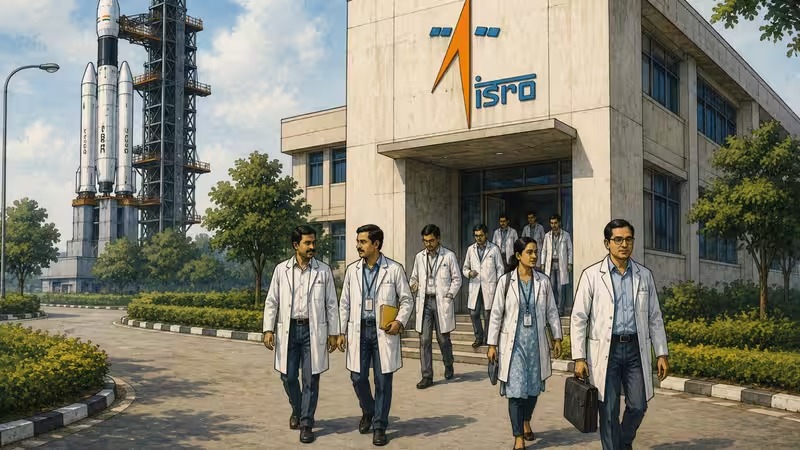

A Growing Debate Around ISRO
India has always looked at the Indian Space Research Organisation with a certain kind of pride. The agency earned that respect slowly, mission after mission, without making too much noise. Successful satellite launches, low-cost space missions, and the remarkable Chandrayaan and Mars projects created a reputation that reached far beyond India. Still, recent conversations have shifted away from rockets and discoveries. More people are now discussing whether increasing interference is making life harder for scientists. Some former experts believe talented researchers are leaving because they no longer enjoy the same freedom that once helped the organization grow.
Why Scientists Are Speaking Out
When experienced scientists publicly express concern, people naturally pay attention. Several retired space experts have argued that administrative pressure and outside influence are affecting research decisions. They believe technical institutions work best when scientific thinking stays ahead of politics and bureaucracy. Those opinions have created fresh debate across academic circles and among ordinary citizens who closely follow India’s achievements in space exploration. Nobody questions the importance of accountability, yet many experts insist that scientific organizations require room to make independent technical decisions without unnecessary distractions.
ISRO Built Its Name Through Scientific Freedom
One reason ISRO became respected around the world was its practical approach toward solving problems. Engineers often found creative solutions despite limited budgets. Instead of copying larger space agencies, Indian scientists built technologies that matched local needs and financial realities. That culture rewarded experimentation, patience, and teamwork. Failures were treated as lessons rather than permanent setbacks. Many observers now wonder whether maintaining that atmosphere has become more difficult. If researchers spend more time dealing with approvals than innovation, progress naturally becomes slower.
Why Autonomy Matters In Space Research
Space science is unlike many ordinary government departments because research cannot always follow strict timelines. Experiments sometimes fail repeatedly before producing useful results. Engineers may need to redesign systems several times before reaching success. Autonomy allows experts to change plans based on evidence instead of external expectations. That flexibility often leads to better engineering and stronger missions. Many international space organizations have shown that scientific independence encourages bold ideas while still remaining accountable for public resources.
The Concern About Talent Leaving
A major issue discussed recently involves experienced professionals choosing retirement earlier than expected or moving toward academic institutions and private space companies. Every organization experiences employee movement, yet the departure of senior scientists creates larger challenges. Their knowledge usually comes from decades of practical experience rather than textbooks alone. Younger engineers learn countless small lessons by working beside such experts. Losing that mentorship can quietly weaken an institution over time. Replacing technical knowledge is rarely quick or simple.
Bureaucracy Can Slow Innovation
Most large organizations require rules, documentation, and proper approval systems. Nobody argues against responsible management because public institutions handle taxpayer money. Problems appear when administrative processes begin influencing scientific priorities too heavily. Researchers often need quick decisions while developing new technology. Delays may increase project costs and reduce efficiency. Even small interruptions during critical development stages sometimes create larger complications later. Scientists generally prefer spending their energy solving engineering problems instead of navigating unnecessary paperwork.
Private Space Companies Are Changing Opportunities
India’s private space sector has grown rapidly during recent years. Startups are designing satellites, launch vehicles, and advanced communication technologies. This expansion creates exciting career opportunities for engineers who once considered ISRO their only major destination. Better salaries, flexible work environments, and faster decision-making attract talented professionals. Healthy competition benefits the overall space industry, but many experts believe ISRO should remain a place where scientists genuinely want to build long careers because of its research culture.
Global Competition Is Becoming Tougher
Space exploration has entered an entirely different era compared with previous decades. Countries across Asia, Europe, and North America continue investing billions in satellites, deep space exploration, lunar missions, and reusable rockets. Private companies also compete aggressively by developing new launch systems and advanced technologies. India cannot rely only on past achievements while others continue moving forward. Maintaining strong scientific institutions becomes even more important as international competition grows faster every year. Protecting research independence may become one important advantage.
Public Trust Depends On Strong Institutions
Citizens celebrate successful missions because they trust the scientists behind them. That trust develops through consistent performance and transparent communication. If debates around institutional independence continue growing, public confidence may eventually face unnecessary pressure. People generally prefer seeing technical decisions explained by experts rather than becoming part of larger political discussions. Strong institutions earn respect by remaining focused on their primary mission, regardless of changing governments or public debates. Stability often becomes one of their greatest strengths.
What Supporters Of Greater Autonomy Believe
People who argue for restoring greater independence usually focus on long-term scientific success rather than short-term headlines. They believe experienced researchers should guide technical planning while administrators provide resources and oversight. This approach does not remove accountability. Instead, it creates clearer boundaries between governance and scientific judgment. Many respected research institutions across the world operate successfully under similar principles. Scientists remain responsible for results while enjoying enough flexibility to pursue innovative solutions.
The Other Side Of The Discussion
Not everyone agrees that interference alone explains the current situation. Some analysts argue that expanding organizations naturally require stronger administrative systems. Large national projects involve budgets, security concerns, international partnerships, and public accountability. Governments therefore play an important coordinating role. Others believe criticism sometimes overlooks the many successful missions completed during recent years. They suggest improvements should happen gradually without assuming every organizational change damages scientific excellence. Both viewpoints deserve careful consideration before drawing broad conclusions.
Finding The Right Balance
Perhaps the real challenge lies somewhere between complete independence and excessive control. Scientific organizations require financial oversight because they operate with public funds. At the same time, technical decisions should remain largely guided by qualified experts. Building that balance demands trust between policymakers, administrators, and researchers. Open communication can reduce misunderstandings before they become larger institutional problems. Encouraging honest feedback from scientists may also strengthen future planning instead of weakening authority.
Why Young Scientists Are Watching Closely
Students dreaming about careers in aerospace pay close attention to these discussions. They want workplaces where creativity receives encouragement and research remains respected. The next generation will shape India’s future missions to the Moon, Mars, and beyond. Creating an environment that rewards curiosity may influence whether talented graduates choose public research institutions or private companies. The decisions made today could affect India’s scientific strength for many decades ahead.
Conclusion
India’s space journey has inspired millions because it proved remarkable achievements are possible through determination, knowledge, and careful planning. The current debate about scientists leaving and calls to restore greater autonomy should be viewed as an opportunity to strengthen institutions rather than create unnecessary divisions. Every successful space program depends on talented people who feel trusted, respected, and free to solve difficult problems through science. Protecting that culture remains essential if India hopes to maintain global leadership in affordable and innovative space exploration. Supporting scientific excellence today will help shape stronger discoveries tomorrow.
Call to Action: Stay informed about developments in India’s space sector, encourage evidence-based discussions, and support policies that strengthen scientific research, innovation, and institutional independence for the benefit of future generations.