
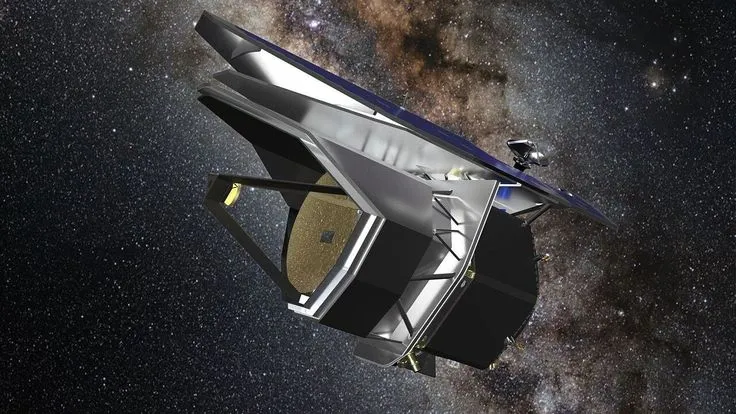
NASA has selected the PRobe far-Infrared Mission for Astrophysics, known as Prima, to advance into the next stage of development. The far-infrared space telescope is designed to study how planets, stars, galaxies and the cosmic ingredients of the universe form and evolve. With a project cost capped at 1.2 billion dollars, Prima becomes the first mission in a new class of NASA astrophysics observatories called Probe Explorers.
A New Class of Astrophysics Missions
Prima was chosen to move into Phase B, the period focused on preliminary design and technology development. The mission must still pass a confirmation review evaluating technical readiness, cost performance and overall programmatics before it can proceed to full implementation. If confirmed, the observatory is targeted for launch in 2033 and is planned to operate for five years.
The Probe Explorers class sits between NASA’s smaller Explorer missions and its large flagship observatories. It was recommended by the National Academies’ 2020 Decadal Survey on Astronomy and Astrophysics as a way to deliver high-impact science on a more frequent cadence than flagship missions while maintaining greater capability than traditional Explorers. Prima is the first mission selected under this new framework.
Bridging a Critical Observational Gap
Far-infrared light occupies a wavelength range that has remained relatively underexplored from space in recent decades. Much of the energy emitted during the formation of planets, stars and galaxies is absorbed by dust and re-radiated at these longer wavelengths. Existing facilities such as the James Webb Space Telescope excel at near- and mid-infrared observations, while radio telescopes probe even longer wavelengths. Prima is designed to fill the gap between them.
The observatory will carry a 5.9-foot (1.8-metre) telescope that is cryogenically cooled to extremely low temperatures. Cooling the optics and detectors dramatically reduces thermal noise, enabling far greater sensitivity than previous far-infrared missions. This capability will allow Prima to conduct deep, wide surveys and detailed spectroscopic studies that were previously impractical.
Science Goals: From Planets to Galaxies
Prima’s core scientific objectives centre on three interconnected themes. First, it will investigate the origins of planets and their atmospheres. By observing protoplanetary disks in the far-infrared, the mission can measure key molecules such as water and use specific spectral lines to determine total gas masses and elemental abundances. These data will help scientists understand where and how planetary atmospheres acquire their chemical composition.
Second, the telescope will examine the co-evolution of galaxies and their central supermassive black holes. During the period known as cosmic noon, when star formation and black-hole growth were most intense, much of the activity was shrouded in dust. Far-infrared observations can penetrate that dust and provide a clearer census of both processes across cosmic time.
Third, Prima will track the buildup of interstellar dust and heavy elements throughout the history of the universe. Dust plays a central role in star formation and planet building, yet its origins and evolution remain incompletely understood. By mapping dust emission and associated spectral features, the mission will help reconstruct how the chemical complexity of the cosmos increased over billions of years.
Instruments and Capabilities
The observatory is planned to carry two primary instruments. One is a high-resolution spectrometer capable of continuous spectral coverage across a wide far-infrared range, offering substantial improvements in sensitivity and survey speed compared with earlier missions. The other is an imaging polarimeter designed to map large areas of the sky and measure the polarisation of far-infrared light, providing information about magnetic fields and dust properties.
Together these instruments will support both a focused principal-investigator science programme and a substantial general-observer programme. A large fraction of observing time is expected to be available to the broader astronomical community, ensuring that the data serve a wide range of research questions.
Management and International Collaboration
NASA’s Jet Propulsion Laboratory will manage the Prima mission. Additional contributions will come from NASA’s Goddard Space Flight Center and Marshall Space Flight Center. The project also involves international partners, including space agencies from France, Italy, Germany, Canada, South Korea, Japan and the United Kingdom. This collaborative structure reflects both the scientific ambition of the mission and the practical advantages of shared expertise and resources.
Context Within NASA’s Astrophysics Portfolio
Prima follows closely after the launch of the Nancy Grace Roman Space Telescope, another major NASA astrophysics mission. While Roman is optimised for wide-field near-infrared surveys and cosmology, Prima targets an entirely different wavelength regime and set of scientific questions. The two observatories are complementary rather than competitive, illustrating NASA’s strategy of building a multi-wavelength suite of facilities capable of addressing the full complexity of cosmic evolution.
By advancing Prima into Phase B, NASA signals its commitment to filling one of the remaining observational gaps in modern astrophysics. If the mission successfully navigates the confirmation process and proceeds to construction and launch, it will give astronomers a powerful new tool for studying the cold, dusty processes that shape planets, stars and galaxies. In doing so, it will help answer fundamental questions about how the universe assembled the ingredients for worlds like our own.
Read more – wellposhan.com
