
A Fresh Start For India’s Exam System
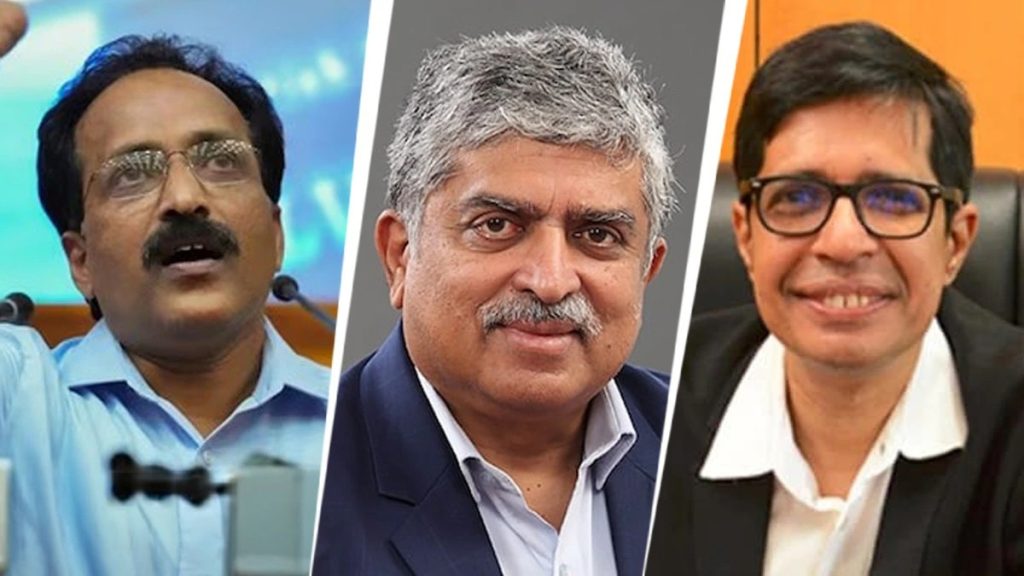
India has talked about examination reforms for years, but this time the conversation feels a little different. Instead of only making policy announcements, the government has chosen people with completely different backgrounds to help rebuild confidence in the country’s examination system. A rocket scientist, a technology architect, and an IIT director may sound like an unusual combination. Still, that mix also brings fresh thinking. Every one of them understands pressure, precision, and responsibility in different ways. Those qualities matter because millions of students depend on fair examinations every single year.
The decision comes after repeated concerns over question paper leaks, technical failures, cheating networks, and confusion around major entrance examinations. Students have repeatedly asked for one simple thing. They want an examination process that rewards preparation instead of luck or manipulation.
Why Examinations Need Serious Changes
Competitive examinations in India have become much larger than they were even a decade ago. Lakhs of students now appear for engineering, medical, recruitment, and university entrance examinations every year. Managing such huge numbers is no longer just an education problem. It has become a technology challenge, a security challenge, and also a governance challenge.
Whenever an examination faces delays or allegations of irregularities, the impact spreads quickly. Students lose confidence. Parents become worried. Coaching institutes create fresh uncertainty. Even universities struggle because admission schedules suddenly become unpredictable. That chain reaction affects everyone connected with education.
Simple administrative fixes are no longer enough. Modern examination systems require digital security, data monitoring, transparent procedures, and quick decision-making whenever unexpected problems appear.
A Rocket Scientist Brings Precision
Rocket science is built around accuracy. Every tiny calculation matters because even a small mistake can lead to major failures. That same mindset can become valuable while designing examination systems across India.
Scientists working on space missions usually depend on multiple verification layers before approving any process. Similar principles could reduce examination errors. Question papers may receive stronger validation. Security procedures can become more detailed. Emergency planning may improve because scientific organizations rarely depend upon a single backup plan.
People often think scientists only solve technical equations. In reality, they spend enormous time managing risk before anything reaches the public. That experience becomes useful when examinations involve millions of students across different states.
Technology Experts Can Strengthen Security
Modern examinations cannot depend only on locked cupboards and sealed envelopes anymore. Digital systems now play an important role from registration until final result declaration. Every online platform becomes a possible target for cyber threats or technical failures.
A technology architect understands how large digital systems behave under heavy pressure. They know how databases communicate, how servers remain stable, and how security layers protect sensitive information. These skills become extremely valuable during nationwide examinations.
Artificial intelligence can also help identify unusual activity. Suspicious registration patterns, duplicate identities, or abnormal examination behavior may become easier to detect before they grow into larger problems. Technology cannot replace honesty, but it certainly makes dishonest activities much harder.
IIT Leadership Adds Academic Balance
An IIT director brings something equally important. Academic understanding cannot be ignored while discussing examination reforms. Technology alone cannot decide whether an examination remains fair or meaningful.
Directors of premier institutions regularly work with faculty members, researchers, industry experts, and students. They understand how entrance examinations influence higher education quality. They also know that testing should measure understanding instead of memorization alone.
A balanced examination should challenge analytical thinking without creating unnecessary confusion. That balance becomes easier when experienced academic leaders participate in policy decisions alongside scientists and technology professionals.
Learning From Recent Examination Challenges
Several examination controversies during recent years have exposed weaknesses in different areas. Some incidents involved paper leaks. Others involved delayed results or technical disruptions. Every incident reduced public trust, even when authorities later resolved the situation.
Instead of treating every problem separately, the new approach appears focused on strengthening the entire examination ecosystem. Better planning, stronger digital systems, independent audits, and faster communication may all become part of the solution.
Students usually accept difficult examinations when they believe the process remains fair. Distrust grows only when transparency appears missing. That lesson has become increasingly clear across many competitive examinations.
Technology Alone Cannot Solve Everything
Many people assume software automatically fixes every administrative issue. Reality rarely works that way. Even the best technology depends upon responsible people using it correctly.
Human oversight remains essential. Examination centers need trained staff members. Security officials require clear responsibilities. Local authorities must respond immediately whenever irregularities appear. Communication between agencies should remain fast and transparent throughout every examination cycle.
Technology works best when supported by disciplined administration rather than replacing it entirely. That combination often produces stronger outcomes than either approach alone.
Students Expect Transparency More Than Promises
Young people today notice everything almost instantly. Social media spreads examination updates within minutes. Rumors travel even faster than official announcements sometimes. Because of that reality, transparency has become more important than ever before.
Students expect timely notifications, clear explanations, and honest communication whenever problems occur. Silence usually creates unnecessary speculation. Open communication often prevents panic before misinformation begins spreading widely.
Trust grows gradually through consistent action instead of impressive speeches. Every successful examination cycle adds confidence. Every transparent investigation strengthens public belief even further.
Digital Monitoring Could Improve Accountability
Data analytics now influences almost every major sector around the world. Education can benefit from similar methods without making examinations unnecessarily complicated.
Digital monitoring can identify delayed examination centers, unusual attendance trends, network failures, and operational issues while examinations continue. Authorities can respond immediately instead of discovering problems after results have already been declared.
Detailed audit trails also improve accountability. Every digital action leaves records. Those records help investigators understand exactly what happened whenever complaints arise. That level of documentation makes future reforms easier because decisions rely upon evidence instead of assumptions.
Building A Future Ready Examination System
India’s education landscape continues expanding rapidly. More universities, more professional courses, and larger recruitment drives mean examination systems must evolve continuously. Old methods may no longer handle future demands efficiently.
Future-ready examinations may include stronger biometric verification, encrypted digital question delivery, smarter monitoring systems, and secure cloud-based infrastructure. These improvements are not about making examinations more difficult. They exist to protect fairness for every honest candidate.
Innovation should never become a burden for students. Instead, it should quietly improve reliability behind the scenes while allowing candidates to focus completely on their preparation.
Public Confidence Will Take Time
Rebuilding trust cannot happen through one committee meeting or one successful examination. Confidence develops slowly because people remember past problems for a long time. Every improvement must prove itself repeatedly before becoming widely accepted.
The involvement of professionals from science, technology, and higher education sends an encouraging message. Different perspectives often produce stronger solutions than decisions made within a single department. That diversity may help identify problems earlier while creating systems capable of handling future challenges more effectively.
Students ultimately judge reforms through experience rather than announcements. If examinations become smoother, safer, and more transparent over several years, public confidence will naturally return.
Conclusion
India’s decision to involve a rocket scientist, a technology architect, and an IIT director in examination reforms reflects a practical shift toward expertise instead of routine administration. Scientific precision, digital innovation, and academic experience together create a stronger foundation for improving fairness across competitive examinations. Challenges will certainly remain because systems involving millions of students are never simple. Even so, thoughtful planning and transparent implementation can gradually restore trust. Success will depend upon consistent execution rather than ambitious promises alone. Stay connected for more insights into India’s education reforms, technology developments, and policy changes shaping the future of students across the country.