
The re-release trend has become one of the most exciting developments in Indian cinema over the past few years. Classic films that once defined an era are finding new life on the big screen, drawing both nostalgic audiences and younger moviegoers eager to experience beloved stories in theatres. One such film creating a wave of excitement is Happy, the popular romantic entertainer starring Allu Arjun.
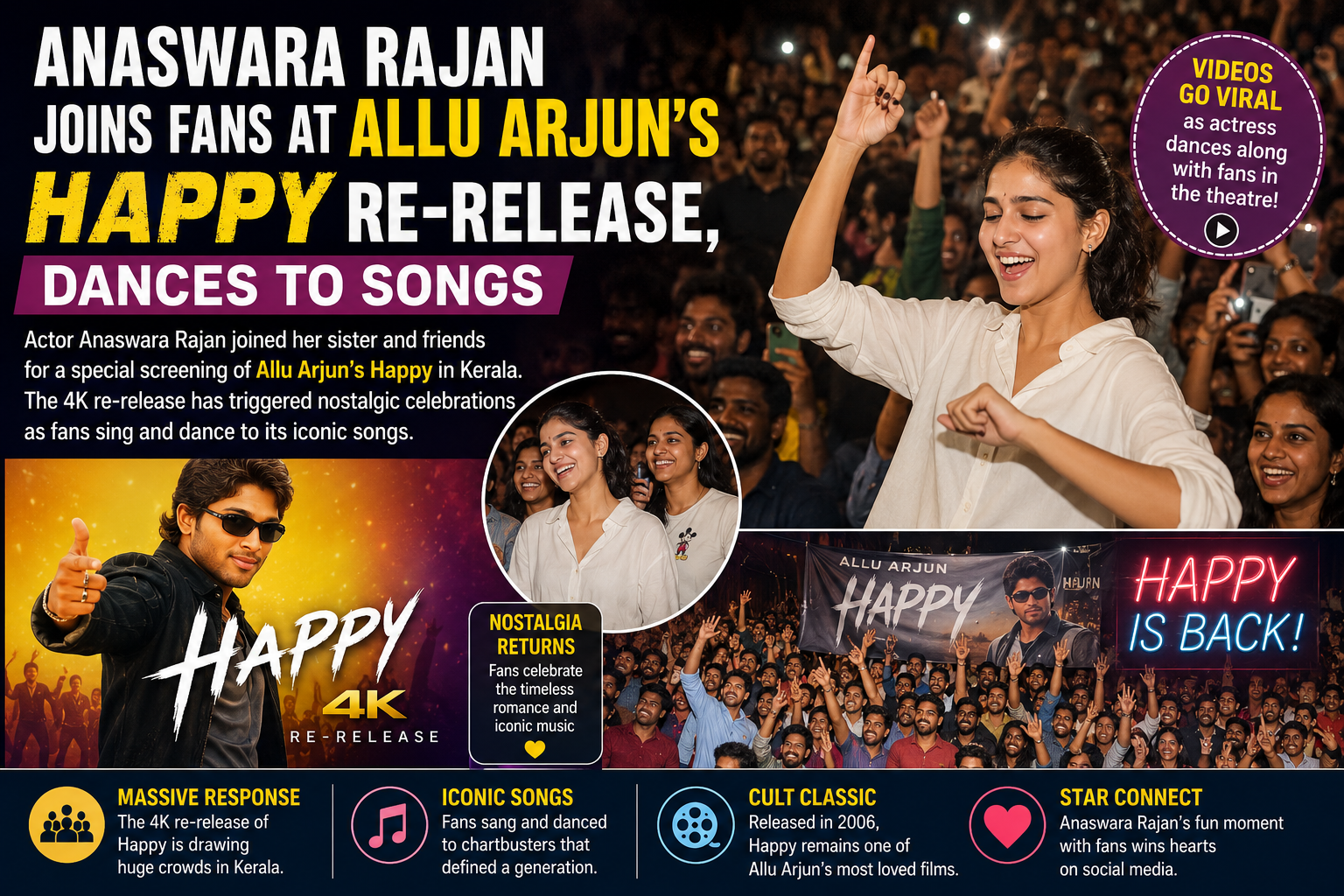
The film’s recent 4K re-release in Kerala has turned into a celebration of nostalgia, music, and fan culture. Adding to the excitement, Malayalam actor Anaswara Rajan joined fans during a theatre screening and was seen dancing to the movie’s popular songs alongside her sister and friends. Videos from the event quickly spread across social media, highlighting the enduring popularity of Happy and the strong fan following that Allu Arjun enjoys in Kerala. The re-release has received an enthusiastic response from audiences across the state, with theatres witnessing celebratory scenes rarely seen for older films.
The Timeless Appeal of Happy
Released in 2006, Happy became one of the films that helped establish Allu Arjun as a major star beyond the Telugu-speaking market. The romantic action-comedy combined youthful energy, memorable songs, emotional storytelling, and charismatic performances, making it a favorite among audiences.
Over the years, the film has maintained a loyal fan base, particularly in Kerala, where dubbed Telugu films have traditionally enjoyed strong viewership. For many fans, Happy represents a cherished part of their childhood and teenage years. The film’s songs, dialogues, and characters continue to evoke fond memories, making the re-release much more than a simple theatrical event. It has become an opportunity for audiences to reconnect with a movie that played an important role in their cinematic journey.
Why the Film Still Resonates With Audiences
Several factors contribute to the lasting popularity of Happy. The film captures youthful romance in a relatable and entertaining way while balancing comedy, drama, and action. Its soundtrack remains one of its strongest assets, with songs that continue to be enjoyed years after the original release. Allu Arjun’s energetic screen presence and unique dance style also contributed significantly to the film’s success. Many fans who grew up watching the movie now view it through a nostalgic lens, associating it with a particular period of their lives. This emotional connection has helped the film maintain its relevance even after nearly two decades.
Anaswara Rajan’s Surprise Theatre Appearance
One of the biggest talking points surrounding the re-release has been the participation of Anaswara Rajan in the celebrations. The young actress attended a screening of Happy with her sister and friends and was seen enthusiastically enjoying the film alongside regular moviegoers.
Videos shared online showed Anaswara dancing to the film’s popular songs inside the theatre, creating a festive atmosphere among fans. Her spontaneous participation resonated strongly with audiences because it reflected genuine admiration for the film rather than a promotional appearance. Social media users praised the actress for embracing the excitement of the moment and celebrating cinema as a fan rather than as a celebrity. The clips quickly went viral and added further momentum to the re-release celebrations.
A Genuine Fan Moment
What made Anaswara’s appearance particularly special was its authenticity. Unlike formal promotional events, her visit appeared to be a personal outing motivated by affection for the film and its music. Fans appreciated seeing a popular actor enjoying a movie in the same way they do. Such moments help bridge the gap between celebrities and audiences, creating a sense of shared enthusiasm. The incident also highlighted how certain films transcend professional boundaries and become cultural experiences enjoyed by people across different segments of the entertainment industry.
Kerala’s Unique Connection With Allu Arjun
Few non-Malayalam actors enjoy the level of popularity in Kerala that Allu Arjun has achieved over the years. The actor’s films have consistently attracted large audiences in the state, earning him the affectionate nickname “Mallu Arjun” among fans. Films such as Arya and Happy played a major role in establishing this connection.
His energetic performances, stylish screen presence, and memorable dance sequences resonated strongly with Kerala audiences. Over time, his popularity expanded beyond individual films and evolved into a lasting fan culture. The strong response to the Happy re-release demonstrates that this connection remains as powerful as ever.
How Dubbed Films Created a Cultural Bond
The success of dubbed Telugu films in Kerala has contributed significantly to cross-industry appreciation. Many audiences grew up watching Telugu blockbusters in Malayalam-dubbed versions, allowing actors like Allu Arjun to become household names. This cultural exchange helped break language barriers and fostered appreciation for cinema across regional industries. Even younger actors have acknowledged growing up watching Allu Arjun’s films, reflecting the depth of his influence in the state.
The Growing Trend of Film Re-Releases
The success of Happy is part of a larger trend reshaping the theatrical experience. Across India, classic films are being digitally restored and re-released to enthusiastic audiences. These re-releases offer fans the opportunity to revisit favorite movies on the big screen while introducing iconic films to a new generation.
Unlike streaming platforms, theatres provide a communal viewing experience where audiences can celebrate together. Singing along to songs, cheering during memorable scenes, and sharing nostalgic moments create an atmosphere that cannot easily be replicated at home. The response to Happy demonstrates the continuing appeal of this shared cinematic experience.
Why Audiences Love Re-Releases
Re-releases satisfy both emotional and entertainment needs. Older viewers appreciate the chance to relive cherished memories, while younger audiences gain access to films they may have missed during their original run. Advances in digital restoration technology also enhance the viewing experience by improving picture and sound quality. In many cases, re-releases transform familiar films into fresh experiences while preserving the emotional impact that made them successful in the first place.
Social Media’s Role in Amplifying Nostalgia
Social media has played a crucial role in the success of modern re-releases. Videos of theatre celebrations, audience reactions, and celebrity participation quickly spread across platforms, generating excitement and encouraging more people to visit theatres.
The viral clips featuring Anaswara Rajan dancing to Happy songs are a perfect example of this phenomenon. Fans shared the videos widely, helping to create additional buzz around the film. These digital conversations extend the reach of theatrical events and contribute to the growing popularity of nostalgia-driven entertainment.
Fan Communities Drive Engagement
Online fan communities often serve as powerful promotional forces for re-released films. Through discussions, videos, memes, and shared memories, fans help sustain interest in movies long after their original release. Their enthusiasm creates momentum that can significantly influence box-office performance and cultural relevance. The Happy re-release benefited greatly from this collective fan energy.
The Importance of Cinema as a Shared Experience
One of the key lessons from the success of Happy is the enduring importance of communal movie-watching. Despite the rise of digital streaming, audiences continue to value the excitement of experiencing films together in a theatre environment.
Events like the Happy re-release remind viewers that cinema is not only about storytelling but also about shared emotions, memories, and cultural connections. Whether it is cheering for a favorite actor, dancing to a beloved song, or celebrating with fellow fans, these experiences contribute to the lasting magic of movies.
Creating New Memories Through Old Films
Interestingly, re-releases do more than revive old memories—they create new ones. Younger audiences experience classic films for the first time, while longtime fans discover fresh perspectives. Celebrity participation, social media engagement, and theatre celebrations add new layers to the film’s legacy. As a result, older movies continue evolving as living cultural experiences rather than becoming static pieces of cinematic history.
Conclusion
The 4K re-release of Happy has become far more than a routine theatrical revival. It has evolved into a celebration of nostalgia, fan culture, and the enduring appeal of cinema. Anaswara Rajan’s enthusiastic participation added a memorable dimension to the event, highlighting the film’s continued influence across generations and industries.
The overwhelming response from audiences in Kerala demonstrates that great films never truly disappear. They remain part of collective memory, waiting for the right moment to reconnect with viewers. As Happy continues to draw crowds and inspire celebrations, it serves as a reminder of the timeless power of storytelling, music, and shared cinematic experiences.
