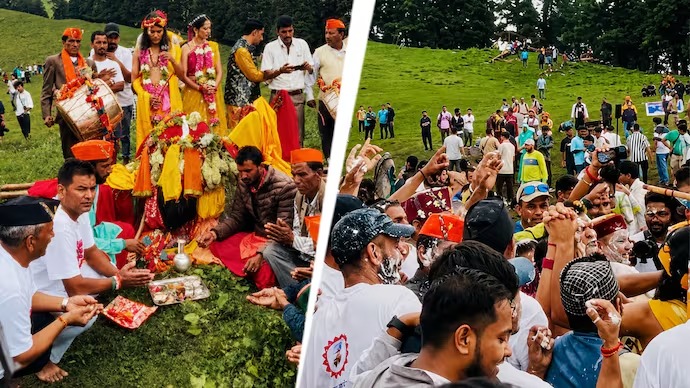

A Very Different Kind Of Holi
Holi usually brings images of coloured powder, water balloons, loud music, and crowded streets across India. But high in Uttarakhand, there is a celebration where people forget the colours completely and pick up butter instead. The festival is known as Anduri Utsav, and it is popularly called the Butter Festival or Makhan Holi.
The celebration takes place around the beautiful Dayara Bugyal meadows in Uttarkashi district, with Raithal village closely connected to the tradition. During the festival, people smear butter across each other’s faces, splash buttermilk around, dance to local music, and celebrate with their communities.
It may look like a playful version of Holi at first glance. But there is much more behind this unusual Himalayan festival, especially when it comes to cattle, nature, local faith, and the seasonal life of mountain communities.
Where This Butter Festival Happens
Dayara Bugyal is a high-altitude alpine meadow in Uttarakhand, and the word “Bugyal” is commonly used locally for mountain grasslands or pastures. The wide green meadows become especially important for villagers who depend on livestock and seasonal grazing.
Raithal village in Uttarkashi has traditionally been associated with the Butter Festival. Villagers take their cattle toward the high meadows during the warmer months, allowing the animals to graze on the abundant mountain vegetation. This seasonal movement has been part of the area’s pastoral lifestyle for generations.
When the grazing season comes toward its end, the return of the cattle becomes a reason for celebration. The festival therefore is not simply an unusual tourist event where people throw butter around. It represents a connection between village life, animals, pastureland, and the natural environment.
Why People Celebrate Makhan Holi
The central idea behind Anduri Utsav is gratitude, especially gratitude for nature and the meadows that support livestock. The animals spend time grazing in Dayara Bugyal, and villagers traditionally associate the healthy cattle and abundant dairy production with the blessings of the land.
The festival also carries a strong devotional connection with Lord Krishna, whose stories are famously associated with cows and butter. Uttarakhand Tourism describes Anduri Utsav as a celebration thanking Lord Krishna for protecting cattle while they graze in the open meadows.
That explains why butter and milk products become such an important part of the celebration. What might look strange to someone seeing it for the first time actually has a clear cultural connection with the traditional cattle-rearing lifestyle of the region.
Butter Replaces Traditional Colours
The most eye-catching part of the festival is obviously the butter. Instead of throwing gulal or coloured water at friends, participants use butter, milk, and buttermilk during the celebrations.
People smear butter over one another’s faces and clothes, while buttermilk gets splashed around during the lively part of the gathering. Soon enough, everyone looks messy, people are laughing, and the atmosphere starts resembling Holi even though there is hardly any traditional colour involved.
It is this unusual combination that has made the event popular as “Makhan Holi.” The scene can look almost chaotic, but it remains connected to a much older village tradition rather than being created simply for visitors.
Music Makes The Meadow Lively
Butter is only one part of the celebration because music and folk performances also play an important role. Traditional Pahari instruments, including dhol-damau, are used during the festivities, while villagers participate in songs and dances.
Cultural performances can also become part of the event, including presentations connected with Lord Krishna and local traditions. The Ministry of Tourism lists traditional folk music, dancing, butter celebrations, and cultural programmes among the activities associated with the festival.
There is also a Dahi Handi element in the celebrations, giving the festival another familiar connection with Krishna-related festivities. So the event mixes several cultural elements together rather than following only one ritual.
Cattle Are At The Heart
The cattle are not a side detail in this festival because they are actually central to its history. Mountain communities have traditionally depended on livestock for milk and other dairy products, while the high meadows provide valuable grazing grounds during suitable months.
The annual movement toward Dayara Bugyal creates a seasonal cycle for local families and their animals. When the cattle eventually return, the occasion becomes an opportunity to express thanks for their safety and wellbeing.
This is why describing the Butter Festival only as “Holi with butter” misses an important part of the story. The fun is certainly there, but underneath that fun is a rural tradition connected with livelihood and the mountain environment.
A Festival Of Nature And Faith
Another interesting thing about Anduri Utsav is the way nature and religious belief come together. The meadow is not treated simply as an attractive tourist location because it has practical importance for the surrounding communities.
People express gratitude toward the land and the forces they believe protect their cattle. Uttarakhand Tourism specifically describes the festival as a way of thanking Lord Krishna and celebrating the protection of cattle in the Dayara Bugyal meadows.
The Ministry of Tourism similarly describes Anduri as a festival expressing gratitude to Mother Nature. That makes the event feel different from many modern festivals where entertainment has gradually become the main attraction.
When The Celebration Takes Place
The Butter Festival is generally associated with the Sankranti period in August, although exact dates can vary from year to year. Uttarakhand Tourism says Anduri Utsav is generally held between August and September, while the Ministry of Tourism describes it as taking place around Sankranti.
In 2026, recent reports said the celebration took place around August 17 at Dayara Bugyal, with villagers and visitors participating in the traditional festivities. Reports from August 18 described the meadow as being filled with milk, curd, and butter during the event.
Anyone planning a visit should therefore check the locally announced dates before travelling because festival schedules can change.
Tourists Are Discovering It
For years, Anduri Utsav remained mainly a community celebration connected with the villages around Dayara Bugyal. That has gradually changed as travellers have become more interested in unusual cultural experiences across Uttarakhand.
Tourists now visit the area to see the Butter Festival and experience the combination of Himalayan scenery and local traditions. Recent reports from 2026 also noted participation from visitors from India and abroad.
That growing attention can be useful for local tourism, but visitors also need to understand that this is a community-rooted cultural celebration. Travellers should respect local customs, avoid treating rituals as entertainment alone, and follow instructions from organisers and villagers.
More Than A Viral Travel Moment
Social media has made unusual festivals easier to discover, and the sight of people covered in butter is obviously something that attracts attention. A photograph from Dayara Bugyal can look completely different from the usual images associated with Indian festivals.
Still, the real significance of the Butter Festival goes beyond a funny photograph or a travel reel. It reflects a way of life where cattle, mountain pastures, seasonal movement, food, faith, and community celebrations have remained closely connected.
That connection is probably the most interesting part of Anduri Utsav. The butter makes people curious, but the story behind the butter makes the festival worth understanding.
Why Anduri Utsav Stands Out
India already has countless regional festivals, and many of them have traditions that may seem surprising outside their home communities. Uttarakhand’s Butter Festival is one of those celebrations that immediately catches attention because it takes something familiar, Holi, and gives it a completely different local character.
There are no colourful clouds covering everyone in the usual way. Instead, butter and buttermilk become part of the playful celebration. At the same time, folk music, cattle traditions, religious beliefs, and respect for the mountain meadows remain woven into the event.
That unusual mixture makes Anduri Utsav much more than another tourist attraction in Uttarakhand.
Final Thoughts On The Butter Festival
Uttarakhand’s Butter Festival offers a fascinating glimpse into how local communities preserve traditions through everyday life, faith, livestock, and nature. The celebration at Dayara Bugyal may look playful because people smear butter and splash buttermilk, but its roots are connected with gratitude for cattle, pastureland, and divine protection. Anduri Utsav also shows how India’s festivals continue to take different forms across regions while keeping their cultural meaning alive. For travellers looking beyond ordinary tourist experiences, this Himalayan celebration offers something genuinely distinctive. Explore responsibly, respect local customs, and discover more about Uttarakhand’s remarkable cultural traditions.
Read More :- DigitalsDynamo.com
