
International travel offers unforgettable experiences, cultural exposure, and personal growth. However, exploring a foreign country also comes with safety challenges that require awareness and preparation. Differences in laws, language barriers, unfamiliar environments, and unexpected emergencies can create risks if travelers are not properly prepared.
Travel safety is not about fear—it is about informed decision-making. By following expert-backed travel guidelines and adopting proactive precautions, international tourists can significantly reduce risks and travel with confidence. Below are essential travel safety tips every global traveler should understand before and during their journey.
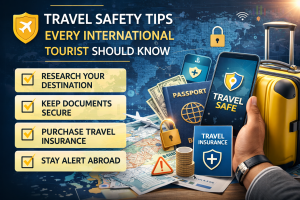
1. Research Your Destination Thoroughly
Preparation begins long before you board your flight.
Understanding local laws, cultural norms, political conditions, weather patterns, and common tourist scams helps prevent avoidable mistakes. Government travel advisories and tourism boards regularly provide updated safety information. Knowing safe and unsafe neighborhoods, transportation options, and emergency contact numbers enhances awareness. Cultural misunderstandings can sometimes lead to legal issues, so respecting local customs is essential. Well-informed travelers make safer decisions and avoid unnecessary risks.
2. Keep Important Documents Secure
Your passport and travel documents are your most valuable possessions abroad.
Always store original documents in a secure location such as a hotel safe. Carry photocopies or digital backups stored securely online for identification purposes. Losing a passport can disrupt travel plans significantly and require embassy assistance. Use anti-theft bags or hidden pouches in crowded places to prevent pickpocketing. Protecting documents ensures smoother handling of emergencies and unexpected situations.
3. Purchase Comprehensive Travel Insurance
Travel insurance is a critical safety net for international trips.
Medical emergencies abroad can be expensive, and many domestic health insurance policies do not provide international coverage. Comprehensive travel insurance typically covers medical expenses, trip cancellations, lost luggage, and emergency evacuations. Unexpected illnesses, accidents, or travel disruptions can occur even with careful planning. Insurance reduces financial stress during emergencies and allows travelers to focus on recovery or problem-solving rather than expenses.
4. Stay Alert in Public Places
Situational awareness is one of the most effective personal safety tools.
Tourist-heavy locations such as airports, public transportation, markets, and landmarks are common targets for theft. Avoid displaying expensive jewelry, large amounts of cash, or high-end gadgets openly. Keep bags zipped and maintain physical contact with personal belongings in crowded areas. Trust your instincts—if a situation feels unsafe, leave immediately. Staying attentive significantly lowers the chances of becoming a target.
5. Use Safe Transportation Options
Transportation safety varies widely across countries.
Research reputable taxi services, ride-sharing platforms, and public transport systems before arrival. Avoid unlicensed taxis or unofficial drivers at airports. When using ride-hailing apps, verify vehicle details and driver identity before entering the car. In some regions, travelers are advised to avoid traveling alone at night. Choosing safe transport options reduces exposure to scams and potential dangers.
6. Protect Your Digital Information
Cybersecurity is an increasingly important travel safety concern.
Public Wi-Fi networks in airports, hotels, and cafes may not be secure. Avoid accessing sensitive financial accounts over unsecured networks. Using a virtual private network (VPN) and enabling two-factor authentication adds extra protection. Keep devices password-protected and update software before traveling. In a digital world, protecting personal data is just as important as safeguarding physical belongings.
7. Be Cautious with Food and Water
Health precautions are essential when traveling internationally.
In certain destinations, tap water may not be safe to drink. Rely on bottled or properly treated water where recommended. Eat at reputable restaurants and avoid undercooked food to reduce the risk of foodborne illnesses. Wash hands regularly and carry hand sanitizer when necessary. Taking preventive health measures protects your trip from being disrupted by avoidable sickness.
8. Understand Local Emergency Procedures
Knowing what to do in an emergency can save valuable time.
Before traveling, note emergency contact numbers for police, ambulance, and fire services in your destination country. Locate the nearest embassy or consulate for assistance with lost passports or legal issues. Share your travel itinerary with trusted family or friends. Familiarity with emergency procedures increases preparedness and reduces panic during unexpected events.
9. Respect Local Laws and Customs
Ignorance of the law is not a valid defense in foreign countries.
Certain behaviors that are acceptable at home may be illegal elsewhere. Laws regarding alcohol, photography, dress codes, and public behavior differ globally. Some countries enforce strict penalties for drug-related offenses or disrespecting cultural traditions. Observing local customs demonstrates respect and prevents legal complications. Responsible tourism enhances safety and cultural harmony.
10. Avoid Risky Areas and Activities
Adventure should not come at the expense of safety.
Avoid neighborhoods known for high crime rates, especially at night. Follow official warnings regarding natural disaster risks, political unrest, or unsafe regions. When engaging in adventure activities such as hiking, diving, or skiing, use licensed operators and proper safety equipment. Taking calculated risks rather than impulsive ones ensures a safer and more enjoyable travel experience.
11. Manage Money Wisely
Financial awareness contributes significantly to travel safety.
Carry limited cash and use secure payment methods when possible. Inform your bank about international travel plans to prevent card blocks. Use ATMs located inside banks or well-lit areas. Avoid exchanging money through unofficial vendors. Smart money management prevents financial losses and reduces vulnerability to theft or fraud.
12. Stay Connected and Share Your Plans
Communication enhances personal safety abroad.
Maintain regular contact with family or trusted contacts during your trip. Share hotel addresses, travel schedules, and transportation details. Enable location-sharing features if comfortable doing so. Having someone aware of your movements provides an added layer of security. In case of emergencies, quick communication can make a significant difference.
Conclusion
International travel can be one of life’s most rewarding experiences, offering exposure to new cultures, cuisines, landscapes, and perspectives. However, safety should always remain a priority. By researching destinations, protecting documents, securing insurance, staying alert, and respecting local customs, travelers can minimize risks significantly.
Travel safety is built on preparation, awareness, and responsible behavior. Most journeys are safe and enjoyable when tourists adopt preventive measures and remain informed. With thoughtful planning and cautious decision-making, international travelers can explore the world confidently while safeguarding their well-being.
A safe traveler is a smart traveler—and preparation is the key to turning every international adventure into a positive and memorable experience.
