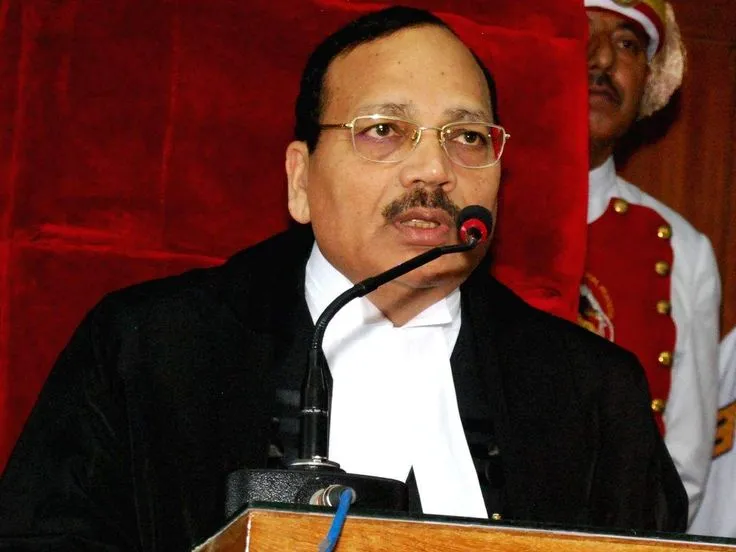
Justice Ashwani Kumar Mishra was sworn in as the Chief Justice of the Punjab and Haryana High Court on Monday, September 7, 2026. The ceremony took place at Lok Bhawan in Chandigarh and was administered by Punjab Governor Gulab Chand Kataria. The event marked the formal elevation of Justice Mishra, who had been serving as the Acting Chief Justice of the court since June. While the occasion represented a routine administrative transition within the judiciary, it unfolded against the backdrop of a sharp disagreement between the Punjab government and the Centre over the appointment process.
Background of the Appointment
Justice Mishra, born on November 16, 1968, began his legal career after completing a Bachelor of Arts in Economics from Kirori Mal College and an LL.B. from the Faculty of Law at the University of Delhi. He enrolled as an advocate in 1993 and practised primarily in civil, constitutional, and service matters. Designated a Senior Advocate in 2013, he was elevated as an Additional Judge of the Allahabad High Court in February 2014 and became a permanent judge in 2016. In July 2025, he was transferred to the Punjab and Haryana High Court.
Following the elevation of the then Chief Justice Sheel Nagu to the Supreme Court, Justice Mishra assumed charge as Acting Chief Justice in early June 2026. The Supreme Court Collegium, headed by Chief Justice of India Surya Kant, recommended his appointment as the permanent Chief Justice on August 6, 2026. The Centre issued the formal notification of the appointment on September 5, 2026. The process from recommendation to notification took roughly one month.
Punjab Government’s Strong Objection
The Punjab government, led by Chief Minister Bhagwant Mann, strongly opposed the manner in which the appointment was finalised. On the evening of September 6, the Punjab Cabinet passed a resolution demanding that the appointment and the administration of oath be put on hold until the state’s views were obtained and duly considered. The government argued that the Centre had notified the appointment without waiting for Punjab’s response, thereby bypassing the Memorandum of Procedure and established constitutional norms.
Chief Minister Mann described the move as an assault on the state’s rights and a violation of prescribed procedures. He wrote letters to the President and the Prime Minister urging that the oath ceremony be deferred. The Cabinet statement emphasised that the Memorandum of Procedure requires the Centre to seek the views of the concerned state government after receiving the Collegium’s recommendation. Punjab maintained that its consent had not been obtained and that the process had been hurried.
The Centre’s position, as conveyed through official statements, was that the views of both the Punjab and Haryana governments had been sought in mid-August. The Governors of both states had approved the proposal, and the Haryana government had submitted a favourable response. Other states involved in concurrent Chief Justice appointments had responded within a week. The Centre maintained that states do not hold a veto over such appointments and that prolonged delay by one state cannot indefinitely stall the judicial process.
The Oath Ceremony and Attendance
Despite the Punjab government’s objections, the oath ceremony proceeded as scheduled. Governor Gulab Chand Kataria administered the oath to Justice Mishra. Among those present were Haryana Governor Ashim Kumar Ghosh, Haryana Chief Minister Nayab Singh Saini, Haryana Assembly Speaker Harvinder Kalyan, and senior officials including Punjab Chief Secretary K.A.P. Sinha. Punjab Chief Minister Bhagwant Mann did not attend the event, underscoring the depth of the state’s disagreement.
The absence of the Punjab Chief Minister stood in contrast to the customary practice in which leaders of both states usually participate in such ceremonies. The presence of Haryana’s leadership highlighted the differing approaches of the two state governments that share the common High Court.
Constitutional and Procedural Context
The dispute centres on the interpretation of the Memorandum of Procedure governing the appointment of High Court Chief Justices. The procedure requires the Centre to obtain the views of the state government, but it does not explicitly mandate the state’s consent or concurrence as a precondition for appointment. Legal observers have noted that while consultation is an essential part of the process, the final decision rests with the President acting on the advice of the Union government after considering the Collegium’s recommendation.
The episode reflects ongoing tensions in Centre-state relations concerning judicial appointments. High Courts that serve more than one state often become focal points for such differences, as the interests and perspectives of the constituent states may not always align. In this instance, the shared jurisdiction of the Punjab and Haryana High Court amplified the political dimensions of an otherwise administrative decision.
Justice Mishra’s Profile and Role Ahead
As Chief Justice, Justice Mishra will head the administrative and judicial functioning of one of the country’s important High Courts. The court serves the states of Punjab and Haryana as well as the Union Territory of Chandigarh. His prior experience as Acting Chief Justice provided continuity in the court’s leadership during the transitional period.
Justice Mishra’s elevation follows a career that includes extensive practice before the Allahabad High Court and subsequent service on the Bench. Colleagues and members of the Bar have noted his background in civil and constitutional litigation. The challenges of managing a large and busy High Court, including case pendency and administrative reforms, will form part of his responsibilities in the new role.
Broader Implications
The controversy surrounding the appointment has drawn attention to the delicate balance between judicial independence, the Collegium system, and the consultative role of state governments. While the Supreme Court Collegium’s recommendations carry significant weight, the involvement of the executive and the states remains an integral part of the constitutional framework. Prolonged disagreements risk creating perceptions of friction that can overshadow the substantive work of the judiciary.
For the Punjab and Haryana High Court, the immediate priority is the smooth continuation of judicial work under its new permanent Chief Justice. The political disagreement that accompanied the appointment is unlikely to alter the day-to-day functioning of the court, yet it serves as a reminder of the complex interplay between institutions in India’s federal structure.
Justice Ashwani Kumar Mishra’s assumption of office marks both a personal milestone and a moment of institutional transition. The circumstances of his elevation have brought into focus questions of procedure, consultation, and Centre-state dynamics that will continue to shape discussions on judicial appointments in the months ahead.
Read more – Thepowerfuldua.com , yandex-games.org