
India’s space programme recorded another technical milestone on September 9, 2026, when the Indian Space Research Organisation successfully completed a flight acceptance hot test of its CE20 cryogenic engine. Conducted at the ISRO Propulsion Complex in Mahendragiri, Tamil Nadu, the test validated the engine at an uprated thrust level of 220 kN. The achievement strengthens two parallel tracks: the progressive enhancement of the LVM3 launch vehicle and preparations for the Gaganyaan human spaceflight programme.
The CE20 Engine and Its Role
The CE20 is an indigenous cryogenic engine that burns liquid oxygen and liquid hydrogen, propellants stored at extremely low temperatures. It powers the upper stage of the LVM3, India’s heaviest operational launch vehicle. Often referred to in popular discussion as Bahubali for its heavy-lift capability, the LVM3 has already demonstrated its reliability by launching Chandrayaan missions and a range of commercial satellites.
In its standard configuration the engine has delivered consistent performance. The latest test focused on operating it at a higher thrust of 220 kN, corresponding to approximately 22 tonnes. This uprated level is intended for the improved C32 upper stage, which also carries a larger propellant load. Together, the higher thrust and increased fuel capacity are designed to raise the payload that LVM3 can deliver to orbit.
Details of the September 9 Test
ISRO described the September 9 activity as a flight acceptance hot test for the specific CE20 engine assigned to an upcoming LVM3 mission. Flight acceptance testing forms a critical quality gate: it confirms that a flight-designated engine performs within required parameters before it is integrated into a launch vehicle stage.
The test simultaneously demonstrated the LOX Tank Pressurization Module, or LTPM. This system maintains the pressure needed to ensure a steady flow of liquid oxygen from the tank to the engine. The LTPM version tested is intended for the C32 stages that will be used on Gaganyaan missions. Successful performance of both the engine at elevated thrust and the pressurization module therefore advances hardware readiness for both commercial and human-rated flights.
Enhancing LVM3 Payload Capability
Increasing the performance of the upper stage is one of the most direct ways to expand a rocket’s payload capacity. By raising CE20 thrust and enlarging the propellant tanks in the C32 stage, ISRO aims to give LVM3 greater flexibility for heavier satellites or more demanding orbital trajectories. This is particularly relevant for commercial launches, where competitiveness often depends on the ability to carry larger or more complex payloads.
The LVM3 already occupies a central position in India’s launch fleet. Incremental upgrades that improve its performance without requiring an entirely new vehicle design allow the agency to respond to growing demand while managing development risk and cost. The successful hot test at 220 kN provides confidence that the uprated engine can meet the demands of future missions.
Supporting the Gaganyaan Programme
Gaganyaan, India’s first crewed spaceflight effort, places stringent requirements on every element of the launch system. Human-rating demands not only reliable performance but also demonstrated margins, redundant systems and thorough qualification of critical components. The C32 upper stage, powered by the CE20 engine, forms part of the propulsion architecture under consideration for these missions.
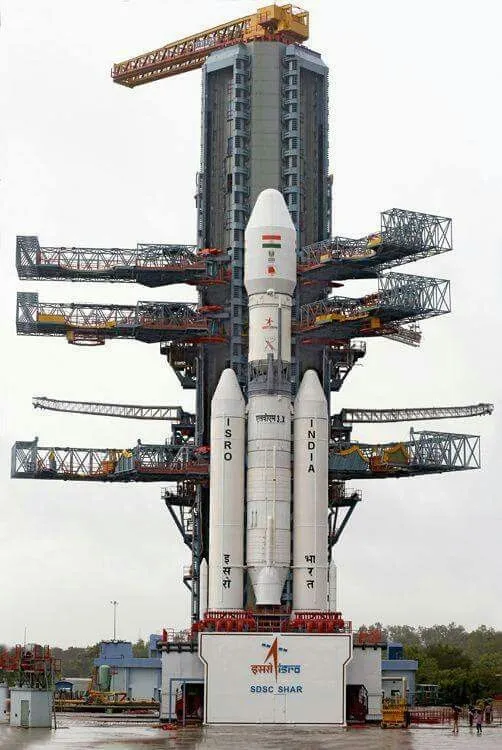
Validation of the LOX Tank Pressurization Module during the same test is therefore significant. Maintaining stable propellant feed under the conditions expected in flight is essential for engine reliability. By confirming the module’s performance in conjunction with the uprated engine, ISRO has taken a practical step toward qualifying hardware that will eventually support astronaut flights.
The Broader Context of Propulsion Development
Cryogenic propulsion has long been a focus of ISRO’s technology efforts. Mastering the handling of liquid hydrogen and liquid oxygen, achieving stable combustion at high performance levels, and building engines that can be produced and tested reliably are all demanding engineering tasks. The CE20 programme reflects years of design, ground testing and flight experience.
Hot tests at facilities such as Mahendragiri allow engineers to observe engine behaviour under controlled conditions that closely approximate flight. Parameters such as thrust, chamber pressure, turbopump performance and thermal behaviour are measured and compared against design predictions. A successful flight acceptance test indicates that the specific engine assigned to a mission has cleared this final ground verification.
Implications for Future Missions
With the CE20 cleared at the higher thrust level, attention turns to stage integration and vehicle-level preparations for the next LVM3 flights that will use the C32 configuration. Each successful test reduces residual risk and builds statistical confidence in the propulsion system.
For Gaganyaan, the path remains longer and more complex. Multiple systems—crew module, life support, launch abort, recovery and the launch vehicle itself—must all meet rigorous safety and performance standards. Progress on the propulsion side, however, removes one potential bottleneck and allows parallel workstreams to continue.
Steady Progress Through Systematic Testing
ISRO’s approach to propulsion development has emphasised incremental validation. Engines and stages are tested at progressively higher performance levels, with each success enabling the next step. The September 9 test fits this pattern: it confirmed both an uprated operating point for the CE20 and the functionality of a pressurization system needed for human-rated stages.
The result is not a dramatic leap but a solid, measurable advance. India’s heaviest operational rocket stands to gain additional payload capacity, while the human spaceflight programme gains further evidence that its cryogenic upper stage can perform as required. In the methodical world of rocket engineering, such confirmed steps are the foundation on which more ambitious missions are built.
The successful hot test at Mahendragiri therefore represents more than a single engine run. It is a practical demonstration that the propulsion technology intended to power both enhanced satellite launches and India’s first crewed flights continues to mature on schedule.
Read more – simplemarathiukhane.com
