
In today’s digital-first academic environment, writing a strong research paper is only part of the journey. Ensuring that the paper is discoverable online is equally important. With the growth of digital libraries, institutional repositories, academic search engines, and indexing databases, researchers must combine scholarly rigor with strategic optimization techniques.
Online visibility increases citations, academic impact, collaboration opportunities, and professional recognition. Search engines and indexing platforms rely on structured content, keywords, metadata, and relevance signals to rank research papers. Therefore, understanding both research methodology and digital optimization principles is essential for modern scholars. This article explores practical strategies to write and optimize a research paper for maximum online visibility while maintaining academic integrity.
Table of Contents
ToggleChoosing a Clear and Relevant Research Topic
Selecting a focused and relevant research topic is the foundation of both academic quality and online discoverability. A well-defined topic ensures clarity of purpose and improves search relevance. Researchers should identify trending themes within their discipline by reviewing recent publications, conference proceedings, and research databases.
Using specific and descriptive terminology enhances the likelihood that search engines and academic platforms will match the paper to relevant queries. Broad or vague titles may reduce visibility because they fail to align with commonly searched terms. A targeted research question not only strengthens the study’s structure but also improves its ranking potential in academic search results.
Conducting a Structured Literature Review
A comprehensive literature review demonstrates subject mastery and helps identify research gaps. Reviewing peer-reviewed journals, academic books, and reputable databases ensures that the research builds on established knowledge. A structured review also allows researchers to incorporate commonly used terminology within the field.
From an optimization perspective, literature reviews naturally integrate important keywords and domain-specific phrases. Search algorithms recognize semantic relevance when a paper reflects consistent terminology aligned with scholarly discussions. This improves indexing accuracy and increases the likelihood of appearing in related search results.
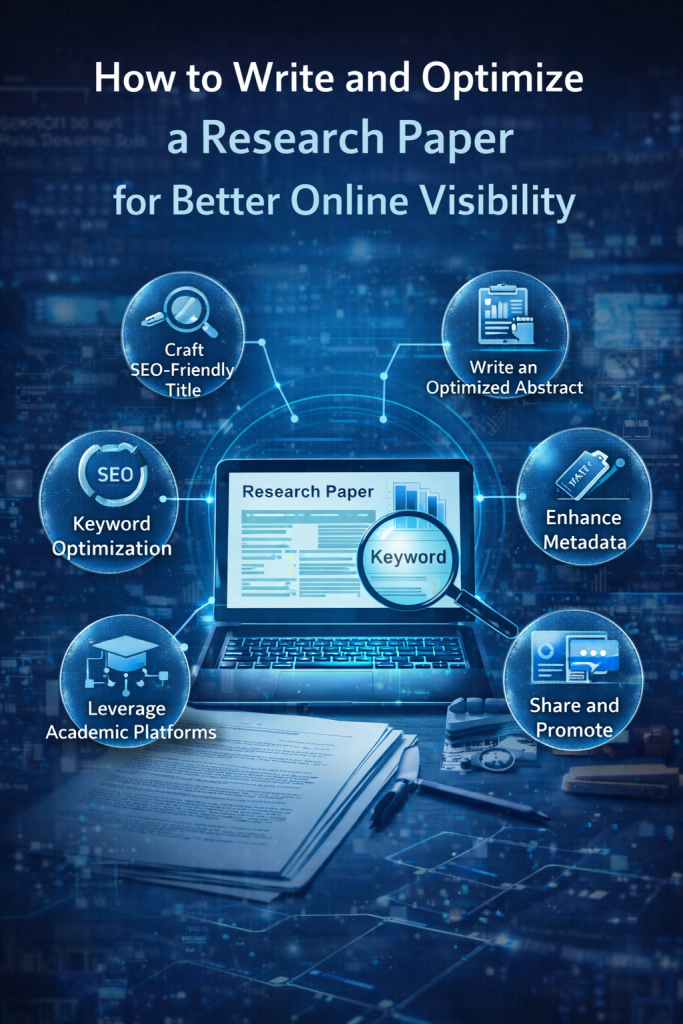
Crafting an SEO-Friendly Title
The title of a research paper is one of the most critical factors influencing visibility. Academic search engines typically prioritize title keywords when ranking results. A clear, concise, and descriptive title should include the primary research terms without unnecessary complexity.
Avoid overly creative or ambiguous titles that obscure the subject matter. Instead, ensure the title reflects the main variables, population, or methodology. For example, including phrases such as “systematic review,” “experimental study,” or “comparative analysis” can enhance search precision. An optimized title balances scholarly tone with keyword clarity.
Writing a Structured and Keyword-Rich Abstract
The abstract serves as a summary and plays a central role in indexing and discoverability. Most digital databases display abstracts in search previews, making them essential for attracting readers. A well-written abstract should clearly state the research objective, methodology, key findings, and conclusion.
Including primary keywords naturally within the abstract improves search engine recognition. However, keyword usage should remain organic and academically appropriate. Overuse or repetition can reduce readability and may be flagged by indexing systems. A structured abstract enhances both user understanding and digital ranking.
Organizing the Paper with Clear Headings and Subheadings
Proper structure improves readability and indexing performance. Most research papers follow a standard format such as Introduction, Literature Review, Methodology, Results, Discussion, and Conclusion. Using clear section headings helps digital systems categorize content effectively.
Structured formatting also benefits human readers, allowing them to navigate the paper efficiently. Search engines often scan headings to determine topic relevance. Therefore, including meaningful keywords within subheadings can subtly improve discoverability. Logical organization strengthens both academic coherence and online optimization.
Using Relevant Keywords Strategically
Keyword strategy plays a major role in enhancing online visibility. Researchers should identify 5–8 core keywords that represent the main themes of the study. These keywords should appear naturally in the title, abstract, introduction, and conclusion.
Academic databases rely on metadata keywords for indexing and categorization. Selecting terms that align with established disciplinary vocabulary ensures better search matching. Avoid using unrelated or trendy keywords simply to attract attention. Relevance and accuracy are more important than keyword density in academic optimization.
Optimizing References and Citations
Accurate and standardized citations improve credibility and discoverability. Many indexing platforms use citation networks to measure research impact. Citing reputable and widely recognized studies increases the likelihood of integration into citation databases.
Using consistent citation styles such as APA, MLA, or Chicago ensures professional presentation. Proper formatting also supports machine readability, allowing automated systems to extract reference information accurately. A well-cited paper contributes to stronger academic networks and improved ranking in research repositories.
Leveraging Digital Repositories and Academic Platforms
Publishing in reputable journals and uploading research to institutional repositories enhances visibility. Many universities maintain digital archives that improve search engine indexing. Additionally, academic networking platforms allow researchers to share their work with a broader audience.
Making research accessible through open-access platforms can significantly increase citation rates. Search engines often prioritize publicly accessible content. Researchers should ensure that their author profiles are updated and consistent across platforms to strengthen digital identity and discoverability.
Enhancing Readability and Technical Quality
Online visibility is influenced not only by keywords but also by user engagement. Research papers that are clearly written, logically structured, and free of grammatical errors are more likely to be cited and shared. Readability tools and peer review processes help refine language and clarity.
Short paragraphs, clear transitions, and precise language enhance user experience. While academic writing requires formal tone, excessive jargon may limit accessibility. Balancing technical precision with clarity improves both scholarly value and audience reach.
Utilizing Metadata and Author Information
Metadata includes details such as author names, affiliations, keywords, publication date, and funding information. Accurate metadata ensures proper indexing in academic databases. Incomplete or inconsistent metadata may reduce search visibility.
Researchers should use standardized author names across publications to build a strong academic profile. Including institutional affiliations and ORCID identifiers helps link publications correctly. Proper metadata management enhances credibility and discoverability in global research ecosystems.
Promoting Research Through Academic Outreach
Promotion plays a growing role in research visibility. Sharing published work through academic conferences, webinars, professional networks, and social media platforms can expand reach. Summarizing findings in blog posts or academic summaries increases accessibility for broader audiences.
Engagement signals such as downloads, citations, and shares contribute to research impact metrics. While quality remains the foundation of scholarly recognition, strategic promotion ensures that valuable research reaches its intended audience.
Conclusion
Writing and optimizing a research paper for better online visibility requires a balanced approach that integrates academic excellence with digital strategy. A clear topic, structured literature review, optimized title, keyword-rich abstract, and well-organized content form the core of effective scholarly writing.
Beyond content creation, proper metadata management, standardized citations, repository publishing, and academic outreach strengthen discoverability. In the evolving digital research landscape, scholars must understand how search engines and indexing systems operate. By combining rigorous methodology with thoughtful optimization practices, researchers can enhance their academic impact, increase citations, and ensure their work reaches a global audience.
Ultimately, visibility is not about manipulation but about clarity, accessibility, and strategic presentation. When high-quality research is presented in a structured and discoverable format, it naturally achieves greater recognition and influence in the academic community.
