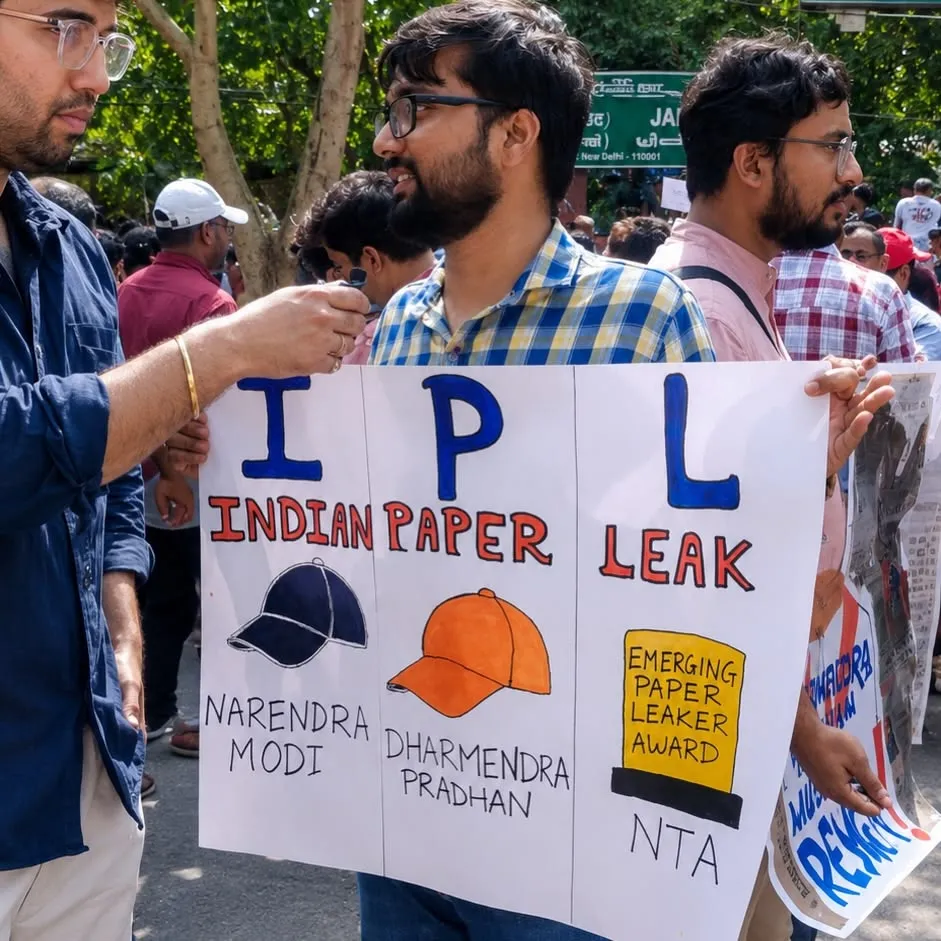
Young Indians who joined recent protests over the education system have returned to their workplaces, triggering a quiet but significant debate inside offices. After weeks of demonstrations at places such as Delhi’s Jantar Mantar, many participants resumed their professional routines. Some were received with appreciation. Others faced subtle disapproval or direct conversations about keeping politics outside work. The experience has raised a larger question for Indian employers: where does an organisation’s authority end, and where do an employee’s rights as a citizen begin?
The Context of the Protests
The protests grew out of deep frustration with repeated problems in India’s examination system, including paper leaks that disrupted major competitive tests. Large numbers of students and young professionals gathered to demand accountability and systemic reform. Many took leave, travelled from other cities, or simply used their personal time to participate. When the demonstrations wound down, the same individuals returned to software teams, marketing departments, sales roles, and other workplaces across the country.
What followed was not uniform. Reactions depended heavily on the culture of each organisation and the outlook of individual managers.
Divergent Workplace Responses
In some offices, colleagues and seniors greeted returning protesters with open support. Employees reported applause, messages of encouragement, and comments that the action showed courage and concern for public issues. These workplaces appeared to view participation in peaceful civic activity as consistent with values such as social responsibility and engagement.
In other settings the reception was cooler. Some managers delivered carefully worded lectures on the importance of staying away from politics. Others offered mild jokes that carried an undercurrent of discomfort. A few employees sensed that their involvement had been noted, even if no formal disciplinary step was taken. The contrast created what observers describe as an invisible workplace lottery: two people could attend the same protest and return to entirely different atmospheres.
Changing Boundaries Between Personal and Professional Life
Older workplace norms often expected employees to leave political or social opinions at the gate. Many members of the younger generation see little separation between their personal convictions and their professional identity. The same social media profiles that display work achievements frequently also show images from protests or statements on public issues. For these employees, such expression represents authenticity rather than confrontation.
Employers, however, are still navigating the implications. Hiring processes increasingly include informal checks of a candidate’s public online presence. Recruiters and managers may form impressions about temperament or potential risk when they encounter evidence of activism. The concern is rarely framed as opposition to activism itself. More often it centres on whether the individual’s public stance could create complications with clients, regulators, or the company’s reputation.
The Role of HR and Company Policies
Most organisations do not maintain explicit policies that ban attendance at peaceful protests during personal time. Instead they rely on broader codes of conduct, social media guidelines, and ethics policies. These documents typically require employees to make clear that personal views are their own and not those of the company. They also prohibit the misuse of company branding or the disclosure of confidential information.
Human resources teams find themselves balancing several responsibilities at once: protecting employee rights, preserving workplace harmony, managing reputational risk, and complying with legal standards. Experts note that companies generally focus on professional conduct and contractual obligations rather than how staff spend approved leave or weekends. Lawful activity undertaken in a personal capacity is usually regarded as outside the employer’s direct control, provided it does not harm the organisation’s legitimate interests.
At the same time, managers often draw a practical distinction between private disagreement and public dissent. Constructive challenge raised inside the organisation may be welcomed as critical thinking. The same views expressed loudly in public can be treated more cautiously, especially when the employee is junior. This gap between stated values of “speaking up” and the actual reception of public activism remains a point of tension.
Rights, Responsibilities, and the Emerging Debate
The return of protesters to offices has crystallised a broader conversation about citizenship and employment. Employees do not cease to be citizens when they enter the workplace. Equally, companies have legitimate interests in maintaining focus, neutrality where required, and protection from unnecessary controversy. Finding the boundary between these two realities is becoming more complex as younger workers bring stronger expectations of authenticity and social engagement.
Some employers see engaged, opinionated young professionals as an asset—people who care about larger issues and may bring the same energy to organisational improvement. Others worry about distraction, polarisation, or external pressure. The difference often lies less in formal policy than in leadership mindset and organisational culture.
Looking Ahead
As Gen Z forms a growing share of the workforce, questions around civic participation and workplace expectations are unlikely to fade. Companies that develop clear, fair, and consistently applied guidelines will be better placed to handle such situations. Transparency about what is considered private conduct and what may affect professional standing can reduce uncertainty for both sides.
Employees, for their part, benefit from understanding the codes of conduct they have signed and the potential implications of highly visible public activity. Peaceful exercise of constitutional rights remains protected, yet the practical realities of employment relationships still shape how that exercise is received.
The recent wave of protests and the varied reception that followed illustrate a workplace in transition. Whether young activists are viewed as heroes who care about the country’s future or as potential headaches depends largely on the values and confidence of the organisations that employ them. The more constructive path lies in recognising that engaged citizens and capable professionals are not mutually exclusive categories, and in building cultures that can accommodate both without forcing an artificial choice between the two.
Read more – thewhipp.com