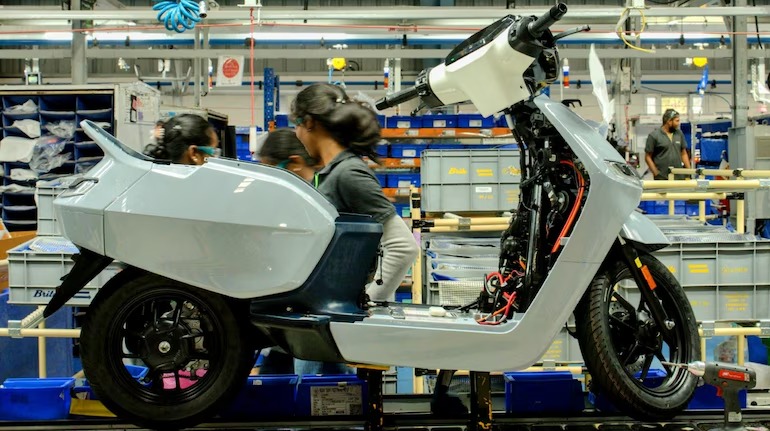

Government support for electric two-wheelers has given India’s EV stocks a fresh push, with Ather Energy and Ola Electric shares gaining up to 4% during Tuesday’s trading session. The move comes after the government extended benefits under the PM E-DRIVE scheme for electric two-wheelers, giving manufacturers and buyers more visibility around continued policy support.
EV Stocks Get Fresh Momentum
Ather Energy and Ola Electric attracted renewed investor attention after the subsidy extension became public, with both stocks moving higher during the trading session. The immediate reaction shows how strongly government incentives still influence sentiment across India’s young electric two-wheeler industry.
For companies selling electric scooters, subsidies can make vehicles more affordable for customers while supporting demand during important growth periods. Investors therefore viewed the latest policy decision as a positive development, particularly because pricing remains one of the biggest considerations for Indian two-wheeler buyers.
The broader electric vehicle market has also become increasingly competitive, with established manufacturers and newer EV-focused companies fighting for market share. Ather and Ola are therefore not operating in an empty field anymore, and every policy advantage can matter considerably.
PM E-DRIVE Support Extended
The government has extended support for electric two-wheelers under the PM E-DRIVE scheme, with the latest decision extending the benefit period toward fiscal 2028 and increasing the overall allocation.
That change is important because the industry had been watching the earlier subsidy timeline closely. A longer support period gives manufacturers more room to plan production, pricing, marketing and customer incentives without facing an immediate policy cliff.
The subsidy is not simply about reducing the purchase price for customers either. It can influence the entire EV ecosystem by encouraging more consumers to consider electric scooters instead of conventional petrol-powered models.
For manufacturers, stronger demand can potentially improve production volumes and help spread fixed costs across more vehicles. That can become particularly useful as companies continue investing heavily in technology, manufacturing capacity, service networks and charging infrastructure.
Why Investors Reacted Quickly
Stock markets often react before the longer-term financial impact becomes completely visible. In this case, the government announcement removed some uncertainty surrounding electric two-wheeler incentives, which helped improve investor sentiment toward companies directly exposed to the segment.
Ather Energy has been strengthening its position in India’s electric scooter market, while Ola Electric has been working through a particularly competitive phase. Recent regulatory and market developments have made the battle for customers even more intense.
According to data included in Ather Energy’s updated draft prospectus, Ather held a 17.1% share of India’s electric two-wheeler retail market in fiscal 2026, while Ola Electric’s share stood at 11.7%. TVS and Bajaj also held significant positions, showing how quickly traditional manufacturers have strengthened their EV presence.
So, the subsidy extension helps the entire category rather than just one company.
Ather Energy Finds More Breathing Room
Ather Energy has become one of the more recognizable electric scooter brands in India, particularly among customers looking for technology-focused products and established EV infrastructure.
The company has also been expanding its product range beyond its earlier performance-oriented positioning. Models such as the Rizta have helped Ather reach customers who want a more practical electric scooter for everyday family usage.
Government support can make that expansion easier because customers become more comfortable with the final purchase price. Even a relatively small reduction can influence buying decisions in India’s highly price-sensitive two-wheeler market.
Ather’s financial and market performance has also attracted investor attention in recent quarters. Its operating revenue, for example, rose 54% year-on-year to ₹899 crore in Q2 FY26, according to reporting around its financial performance.
That does not automatically mean the stock will keep rising, but it does explain why investors are watching the company closely.
Ola Electric Faces Different Challenges
Ola Electric remains one of India’s most visible electric scooter manufacturers, but its journey has been more complicated recently. The company has faced increasing competition from Ather, TVS, Bajaj and other established manufacturers.
Ola previously enjoyed a much stronger position in the electric two-wheeler market, but its market share declined substantially by fiscal 2026. The latest Ather prospectus data shows Ola’s share falling to 11.7%, compared with 29.9% in fiscal 2025.
That makes government support especially interesting for Ola because lower effective vehicle costs could help the company compete more aggressively on pricing.
Still, subsidies alone cannot solve every business problem. Product quality, after-sales service, customer confidence, software experience and dealership coverage will continue influencing purchase decisions.
Electric Scooter Demand Could Improve
The subsidy extension arrives while India’s electric two-wheeler market continues developing at a rapid pace. More customers are now familiar with electric scooters, and several major manufacturers have entered the segment with products aimed at different price points.
Recent market data has shown strong electric two-wheeler sales, with TVS, Bajaj, Ather, Vida and Ola among the prominent brands competing for customers.
This matters because government incentives work better when consumers already understand the technology.
Someone buying an electric scooter today is not necessarily an early adopter anymore. Many buyers are comparing battery range, charging time, warranty, service availability and running costs just like they compare petrol scooters.
That shift is healthy for the industry because competition becomes based on actual product value rather than simply novelty.
Lower Running Costs Remain Important
The biggest argument supporting electric two-wheelers is not always the upfront subsidy. Running costs can also make a major difference over several years of ownership.
Analysis cited in Ather Energy’s draft prospectus found that, at an annual usage of 8,000 kilometres, the total cost of ownership for an electric two-wheeler with applicable subsidy was estimated to be 43% lower than an internal-combustion two-wheeler in fiscal 2026.
That gap becomes more meaningful for people who use their scooters regularly for commuting.
However, consumers still need to consider battery warranty, charging availability, financing costs, insurance and maintenance before making a purchase decision. A subsidy can improve the equation, but it does not remove all ownership expenses.
Competition Will Stay Extremely Strong
The latest market environment is much tougher than it was a few years ago. Companies like TVS Motor and Bajaj Auto have built serious electric scooter portfolios, while Hero MotoCorp and other manufacturers are also expanding their presence.
This means Ather and Ola cannot depend only on government incentives to maintain growth.
They need attractive products, competitive pricing and dependable customer support at the same time. That is easier said than done because EV companies are still investing heavily while trying to achieve sustainable profitability.
For investors, this distinction matters considerably. Higher sales can look impressive, but the quality of those sales, margins and cash flow ultimately determine whether a business becomes financially stronger.
What The Extension Means For Buyers
For consumers considering an electric scooter, the subsidy extension provides more certainty than an immediate withdrawal would have offered. Buyers can continue comparing electric models without worrying that government support will disappear overnight.
Still, buyers should check the exact eligibility conditions, applicable subsidy amount and registration requirements before purchasing any vehicle. State-level EV incentives can also differ, which means the final benefit may vary considerably between locations.
The best approach is to compare the complete on-road price rather than focusing only on the advertised subsidy.
A scooter that looks cheaper after incentives may not necessarily be the best overall purchase. Battery capacity, real-world range, service network, warranty coverage and resale expectations should also be considered before making the final decision.
A Positive Signal, But Not A Guarantee
The rise in Ather Energy and Ola Electric shares shows that investors welcomed the government’s decision, but one strong trading session should not be confused with a guaranteed long-term turnaround.
EV companies still face major challenges around profitability, competition, manufacturing costs and customer retention. Policy support can create favorable conditions, but companies have to convert those conditions into sustainable business growth.
The extension does, however, provide an important runway for India’s electric two-wheeler industry. It gives manufacturers additional time to improve technology, expand production and make electric scooters more accessible to mainstream buyers.
That could prove valuable as India continues moving toward greater electric mobility adoption.
Conclusion
The rise in Ather Energy and Ola Electric shares reflects renewed confidence after the government extended support for electric two-wheelers under the PM E-DRIVE framework. The decision provides greater policy visibility for manufacturers while potentially improving affordability for consumers. At the same time, the competitive environment remains challenging, with traditional two-wheeler companies gaining significant EV market share. Subsidies can support demand, but long-term success will depend on product quality, pricing, service networks, technology and financial performance. Investors and buyers should therefore look beyond the immediate market reaction and evaluate the wider EV market carefully.