
Every year, lakhs of devotees undertake the sacred Amarnath Yatra, one of India’s most revered pilgrimages. Nestled at an altitude of nearly 3,880 metres in the Himalayas, the Amarnath Cave attracts pilgrims seeking spiritual fulfillment despite the physically demanding journey. For 2026, the pilgrimage is scheduled to begin on July 3 and continue until August 28, with authorities implementing enhanced safety measures, including increasing the accident insurance cover for registered pilgrims from Rs 5 lakh to Rs 10 lakh.
While this enhanced accident cover is a welcome step, healthcare experts caution that it should not be mistaken for comprehensive medical insurance. High-altitude illnesses, cardiac emergencies, respiratory complications, and hospitalisation expenses may not be fully covered under the accident policy. As a result, travellers are being advised to carefully review their health insurance before beginning the pilgrimage.
A well-planned journey involves more than registration, accommodation, and travel arrangements. Adequate medical preparation and suitable health insurance can make a significant difference if an emergency occurs during the yatra.
Understanding the Rs 10 Lakh Accident Cover
The Shri Amarnathji Shrine Board (SASB) has increased the accidental insurance cover for registered pilgrims to Rs 10 lakh for the 2026 pilgrimage. The policy primarily provides financial protection in cases involving accidental death or disability during the yatra. Similar coverage has also been extended to several service providers associated with the pilgrimage.
Although this measure strengthens the safety net for pilgrims, experts emphasize that accident insurance is not the same as comprehensive health insurance.
For example, if a pilgrim suffers a heart attack, develops severe altitude sickness, requires intensive care, or needs emergency surgery because of illness rather than an accident, the costs may not necessarily be covered under the accident policy.
Understanding this distinction is essential before undertaking the journey.
Why Medical Preparedness Is So Important
The Amarnath Yatra is considered one of India’s most physically demanding religious pilgrimages.
The cave shrine is located at a high altitude where oxygen levels are significantly lower than at sea level. Pilgrims often face steep climbs, cold temperatures, unpredictable weather, rainfall, and long hours of walking.
Even healthy individuals may experience physical stress due to the demanding environment.
People with existing heart disease, high blood pressure, diabetes, asthma, or chronic respiratory illnesses face greater risks and should consult their physicians before travelling.
Medical preparedness therefore becomes just as important as spiritual preparation.
High-Altitude Illnesses Every Pilgrim Should Know
One of the biggest health concerns during the Amarnath Yatra is altitude-related illness.
Acute Mountain Sickness (AMS) is the most common condition experienced at higher elevations. Symptoms may include headache, dizziness, nausea, fatigue, difficulty sleeping, and breathlessness.
In more severe situations, High-Altitude Pulmonary Edema (HAPE) or High-Altitude Cerebral Edema (HACE) may develop. These conditions require immediate medical attention and can become life-threatening if left untreated.
Medical experts recommend that pilgrims understand these risks before beginning the trek and ensure their insurance policy adequately covers treatment for altitude-related emergencies.
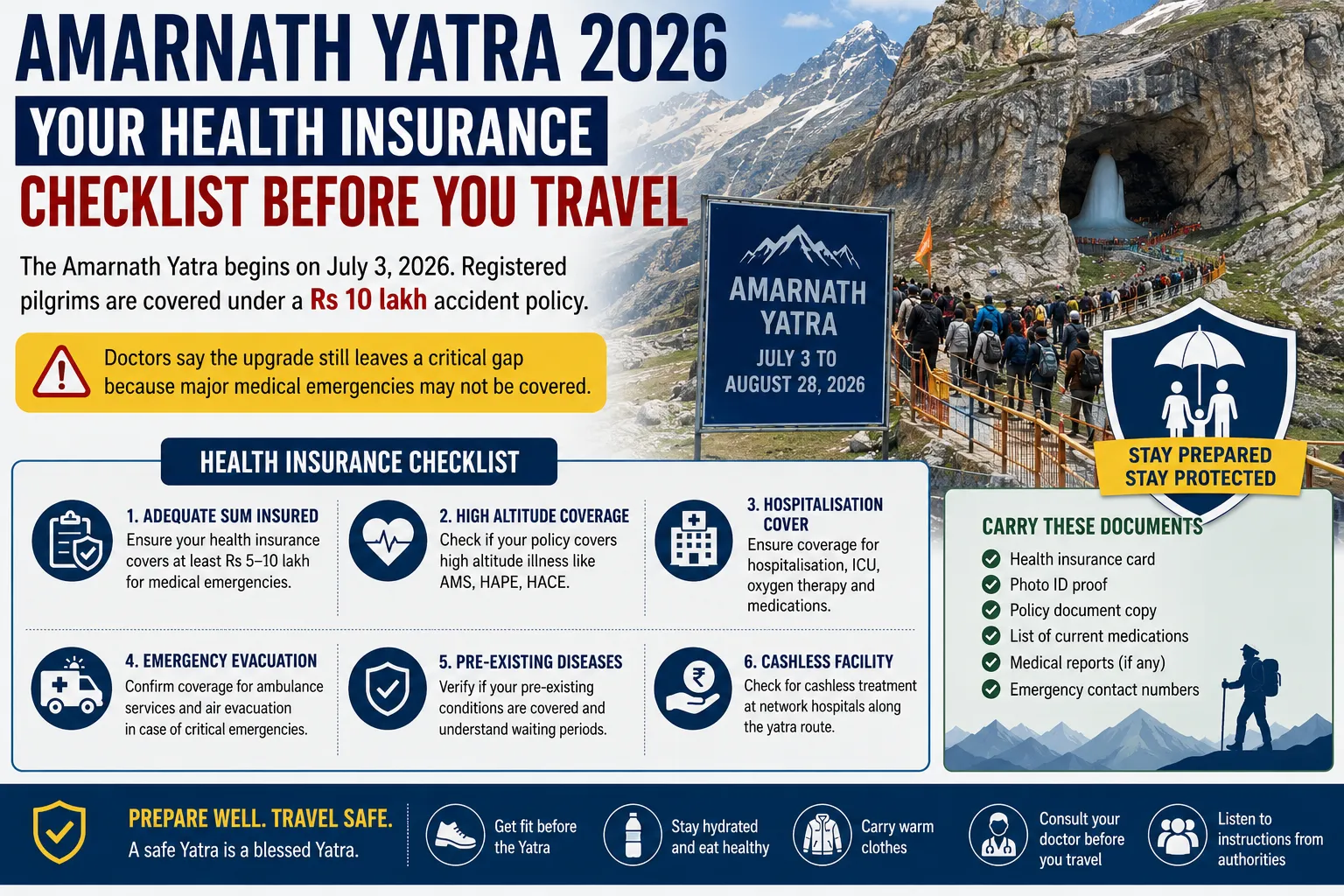
What Your Health Insurance Should Cover
Experts recommend reviewing your existing health insurance policy carefully before travelling.
A suitable policy should ideally include emergency hospitalisation, treatment for cardiac emergencies, stroke management, oxygen therapy, intensive care services, and coverage for high-altitude illnesses.
Emergency ambulance services, including ground or air evacuation where available, can also prove valuable during medical emergencies in mountainous terrain.
Pilgrims should additionally verify whether their insurance includes cashless treatment at hospitals located along or near the yatra route.
Policies with higher medical coverage limits are generally preferable given the potentially high cost of emergency treatment.
Check Your Pre-Existing Disease Coverage
Many pilgrims undertaking the Amarnath Yatra are senior citizens or individuals managing chronic medical conditions.
If you have diabetes, hypertension, heart disease, asthma, kidney disease, or any long-term illness, it is important to verify whether your insurance policy covers treatment related to pre-existing conditions.
Some insurance plans include waiting periods or exclusions that may affect claims.
Understanding these provisions before travelling can help avoid unexpected financial burdens during emergencies.
Importance of Cashless Hospital Facilities
Medical emergencies require immediate treatment.
Cashless hospitalisation allows insured individuals to receive medical care without making substantial upfront payments.
Pilgrims should identify network hospitals situated in Jammu, Srinagar, Baltal, Pahalgam, and other important locations along the pilgrimage route.
Knowing where cashless facilities are available may reduce delays during emergencies and simplify the claims process.
Emergency Evacuation Can Save Lives
Remote mountainous terrain presents unique challenges during medical emergencies.
Patients suffering severe altitude sickness, cardiac events, or major injuries may require rapid evacuation to better-equipped hospitals.
Some comprehensive health insurance policies include emergency evacuation benefits, while others may exclude such services.
Pilgrims should carefully review whether helicopter evacuation or specialised ambulance transportation is included under their policy.
Although such emergencies are uncommon, evacuation costs can be significant.
Carry Essential Medical Documents
Insurance coverage becomes far more useful when documentation is readily available.
Pilgrims should carry physical and digital copies of their health insurance card, identification documents, emergency contact information, prescription medicines, recent medical records, and details of any chronic illnesses.
Maintaining a list of current medications and known allergies can also assist healthcare providers if emergency treatment becomes necessary.
These simple precautions can significantly improve response time during medical situations.
Physical Fitness Matters Too
Insurance provides financial protection, but prevention remains equally important.
Doctors generally recommend preparing physically several weeks before the pilgrimage.
Regular walking, cardiovascular exercise, breathing exercises, and gradual improvement in stamina may help pilgrims adapt better to the demands of high-altitude trekking.
Adequate hydration, nutritious food, sufficient rest, and avoiding excessive exertion during the journey further reduce health risks.
Pilgrims experiencing persistent chest pain, severe breathlessness, dizziness, or confusion should seek medical attention immediately rather than attempting to continue the trek.
Registration and Health Requirements
The Shri Amarnathji Shrine Board requires pilgrims to complete mandatory registration before undertaking the yatra.
A Compulsory Health Certificate issued by an authorised medical institution is also required, confirming that the pilgrim is medically fit for the journey. Eligibility rules also prescribe age-related requirements and other health conditions for participation.
These requirements reflect the physically demanding nature of the pilgrimage and are intended to enhance pilgrim safety.
Common Mistakes Pilgrims Should Avoid
Many travellers assume that the complimentary accident cover offered during the yatra provides complete financial protection.
However, accident insurance and health insurance serve different purposes.
Another common mistake is failing to disclose pre-existing medical conditions when purchasing insurance or neglecting to verify coverage limits before departure.
Some pilgrims also underestimate the physical challenges posed by high altitude and delay seeking medical assistance when symptoms first appear.
Timely treatment often prevents minor health problems from developing into serious medical emergencies.
A Safe Pilgrimage Begins With Good Planning
The Amarnath Yatra is a deeply spiritual journey that demands careful preparation.
Along with completing registration, arranging transportation, and packing appropriate clothing, health planning should receive equal attention.
Reviewing your insurance policy, consulting your doctor, carrying essential medications, and understanding emergency procedures can contribute significantly to a safer pilgrimage experience.
Faith inspires millions to undertake this sacred journey each year, but informed preparation helps ensure that devotion is accompanied by safety and peace of mind.
Conclusion
The enhancement of accident insurance coverage to Rs 10 lakh for registered Amarnath Yatra pilgrims represents an important step toward improving pilgrim safety. However, healthcare experts caution that this coverage should not be viewed as a substitute for comprehensive medical insurance. High-altitude illnesses, cardiac emergencies, respiratory complications, and hospitalisation expenses may require additional health insurance protection beyond the accident policy.
Before beginning the 2026 Amarnath Yatra, every pilgrim should carefully evaluate their medical fitness, review their insurance coverage, and prepare for potential health emergencies. A comprehensive health insurance policy, combined with proper physical preparation and responsible travel planning, can provide valuable protection during one of India’s most challenging yet spiritually rewarding pilgrimages.
