From 1 November 2026, mobile users in India will see a significant change in how incoming calls appear on their screens. The Department of Telecommunications has directed all telecom service providers to introduce Calling Name Presentation, or CNAP, across their 4G and higher-generation networks. Under the new system, the caller’s name will be displayed alongside the telephone number by default, reducing the number of truly unknown callers.
What CNAP Means for Everyday Users
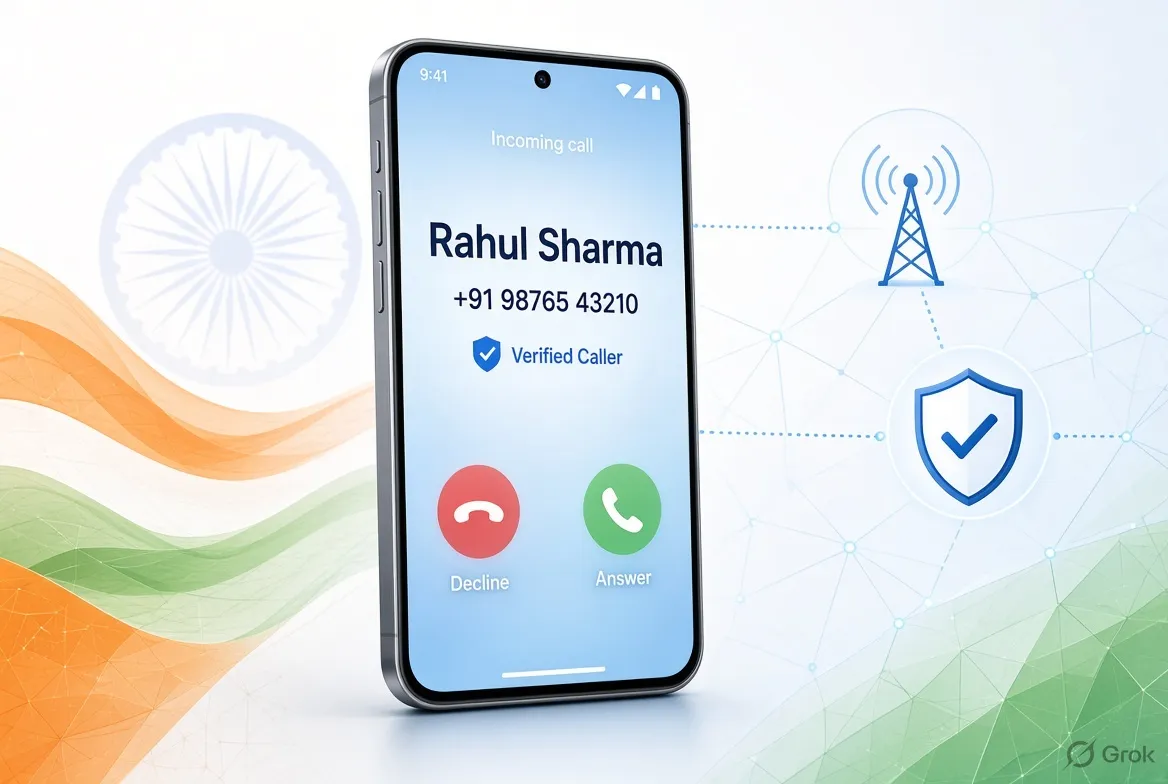
Calling Name Presentation is a network-based service that presents the identity of the person making the call. When a call arrives, the recipient’s phone will show two pieces of information: the telephone number, as it does today, and a name field. The name that appears depends on simple, clearly defined rules.
If the recipient has already saved the number in their contact list, the saved name takes priority. This ensures that personal labels such as “Mum,” “Office” or a nickname remain visible. If the number is not saved, the system displays the name recorded in the subscriber database of the telecom operator from which the call originates. For calls coming from outside India, the display will simply read “International Call.”
The service will be enabled automatically. Users do not need to submit a request, download an application or change any settings. Telecom operators are required to provide it to every user on the covered networks without additional action on the subscriber’s part.
Scope of the Rollout
The initial mandate covers wireless terrestrial networks operating on 4G and newer technologies, including 5G. The Department of Telecommunications has stated that the introduction of CNAP on 2G and 3G networks, as well as on public switched telephone networks (landlines), will be examined and considered separately at a later stage.
This phased approach reflects the technical realities of different network generations. Trials have already been conducted by operators on 4G and higher-generation systems, giving the industry a foundation on which to implement the service nationwide from the notified date.
How the System Works Behind the Scenes
Each telecom service provider must create and maintain a database that links subscribers’ names to their telephone numbers. When a call is placed, the originating operator makes the relevant name identity available. The receiving operator retrieves that information and presents it on the called user’s device.
Security and privacy safeguards are built into the framework. The system is required to present calling line identification in a manner secured against tampering. Names of users who have activated Calling Line Identification Restriction will not be displayed. Additionally, the design aims to ensure that the caller’s name is not retained through the query-response process after the call ends.
For business and bulk connections, operators may offer the option to present a “preferred name” instead of the name recorded in the subscriber database. Such preferred names must meet verification criteria, typically a trademark registered with the Trade Marks Registry or a trade name registered on the GST portal. This provision allows legitimate businesses to display a recognisable brand name while maintaining accountability.
Addressing Fraud and User Confidence
One of the primary motivations behind CNAP is to help users identify callers more reliably and reduce the success of fraudulent or unsolicited calls. When an unfamiliar number appears, the presence of a registered name can provide an immediate clue about the caller’s identity. While the system cannot eliminate every form of misuse, it raises the threshold for anonymous or deceptive calling on domestic networks.
The move follows recommendations made by the Telecom Regulatory Authority of India and subsequent preparatory instructions from the Department of Telecommunications. By making verified name presentation a default network feature, the government aims to shift caller identification from optional third-party applications to a standardised, operator-backed service.
Practical Implications for Users
For most people, the change will be straightforward. Known contacts will continue to appear as they do now. Unknown domestic numbers will show a name drawn from the operator’s records rather than remaining completely blank. International numbers will be clearly marked. Users who prefer privacy can still rely on existing restriction facilities where available.
Businesses that rely on outbound calling may need to review how their numbers are registered and whether they wish to use a verified preferred name. Accurate and up-to-date subscriber records will become more important, as the name displayed will be drawn directly from those records.
Looking Ahead
The introduction of CNAP represents a structural upgrade in India’s telecommunications framework. By embedding caller name presentation into the network itself, the system reduces dependence on external apps whose databases may be incomplete or inconsistent. It also creates a more uniform experience across operators and devices that support the feature.
As with any large-scale network change, the effectiveness of CNAP will depend on accurate data maintenance by operators, smooth technical implementation and continued attention to privacy and security. The separate consideration of older network technologies and landlines indicates that the policy is intended to expand over time as technical and operational readiness allows.
From 1 November 2026, the experience of receiving a call in India will carry an additional layer of information. The combination of number and name is expected to give users greater clarity and control at the moment a call arrives. In an environment where unsolicited and fraudulent communications remain a concern, that additional clarity is a meaningful step toward safer and more transparent telephony.
Read more – insurancesach.com