
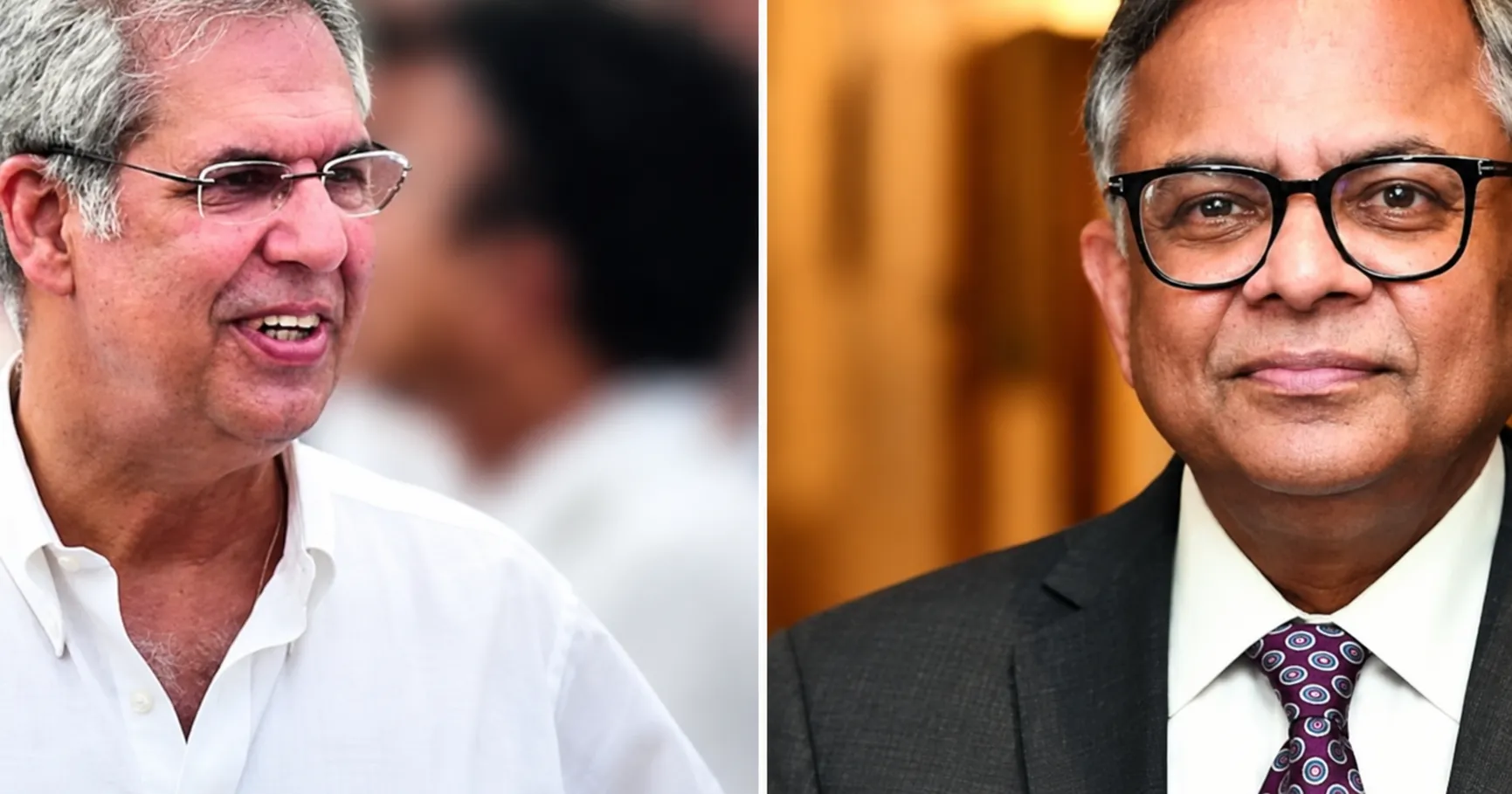
Tata Trusts Chairman Noel Tata and trustee Neville Tata have filed caveats before the Bombay High Court and the Mumbai City Civil Court. The preventive legal filings come amid an ongoing dispute over the governance and functioning of the Tata Trusts, particularly the Sir Dorabji Tata Trust. The caveats name fellow trustees Venu Srinivasan, Vijay Singh, Darius Khambata and Bhaskar Bhat as the parties against whom protection is sought.
Understanding a Caveat
A caveat is a formal legal notice filed under the Code of Civil Procedure. It ensures that a person who anticipates possible court proceedings is given prior notice and an opportunity to be heard before any order, especially an interim or ex-parte order, is passed that could affect their interests. Once filed, a caveat remains valid for 90 days. If any of the named parties approaches the court seeking relief, the court must first inform the caveators and hear their side.
In this instance, the filings by Noel Tata and his son Neville are intended to safeguard their positions should other trustees move the courts in connection with the internal differences.
Details of the Filings
Court records show that the caveats were filed on 7 October 2026. Noel Tata and Neville Tata appear as the caveators. The four other trustees of the Sir Dorabji Tata Trust — Venu Srinivasan, Vijay Singh, Darius Khambata and Bhaskar Bhat — have been listed as caveatees. Together, these six individuals form the board of the Sir Dorabji Tata Trust.
Legal observers note that when disputes arise among trustees, all members of the board are often named as parties for procedural completeness. Sources familiar with the matter have indicated that the inclusion of Darius Khambata and Bhaskar Bhat is largely procedural, and that their broader stance on the issues under discussion has remained supportive of Noel Tata and Neville Tata.
Background to the Dispute
The caveats form part of a wider governance disagreement within the Sir Dorabji Tata Trust, one of the principal charitable trusts linked to the Tata Group. The trust holds approximately 28 per cent of Tata Sons, the holding company of the Tata Group, making it the largest single shareholder among the Tata Trusts.
Differences among the trustees have centred on questions of administration, the responsibilities of trustees, leadership arrangements and the trust’s role in matters relating to Tata Sons. Venu Srinivasan and Vijay Singh had earlier approached the Maharashtra Charity Commissioner with complaints seeking an inquiry into the administration and governance of the Sir Dorabji Tata Trust. Their concerns reportedly included the appointment and continued status of Noel Tata as a perpetual trustee, the basis on which he holds the chairmanship of Tata Trusts, and related decision-making processes.
The Charity Commissioner had initially given the trust until 12 October to respond. Following a request for more time, the deadline was extended to 19 October 2026.
Earlier Protective Filings
Before approaching the High Court and City Civil Court, related protective steps had already been taken. Tata Trusts entities, excluding the Sir Dorabji Tata Trust, had filed a series of caveats before the Maharashtra Charity Commissioner under relevant provisions of the Maharashtra Public Trusts Act. Those filings similarly sought to ensure that the trusts would be heard before any orders were passed concerning them.
Noel Tata and Neville Tata had also filed caveats directly with the Charity Commissioner’s office in response to the complaints. The latest court filings extend that protective approach to the judicial level.
Significance for the Tata Trusts
The Tata Trusts collectively hold a majority stake in Tata Sons and play a central role in the philanthropic and ownership structure of the Tata Group. Any prolonged disagreement among trustees carries implications not only for the internal functioning of the trusts but also for the broader governance framework that has historically linked the charitable institutions with the commercial entities of the group.
By filing caveats, Noel Tata and Neville Tata have signalled that they wish to ensure full procedural fairness and the opportunity to present their case should the dispute escalate into formal court proceedings. The move does not by itself initiate litigation; rather, it is a defensive step designed to prevent unilateral orders being passed without their knowledge or participation.
Current Status and Next Steps
The Sir Dorabji Tata Trust is expected to submit its response to the Charity Commissioner by the extended deadline of 19 October. Parallel to that process, the caveats in the High Court and City Civil Court remain in force for the statutory period. Should any of the named trustees approach either court seeking interim or other relief, Noel Tata and Neville Tata will be entitled to notice and a hearing.
The developments underline the seriousness with which the parties are treating the differences that have emerged. While the core issues continue to be examined through the regulatory channel of the Charity Commissioner, the court filings prepare the ground for possible judicial scrutiny if the disagreements are not resolved through internal or regulatory means.
For now, the filing of caveats represents a measured legal precaution aimed at protecting procedural rights in a sensitive and high-stakes governance matter involving one of India’s most prominent philanthropic and industrial institutions.
Read more – Peopleinfoz.com
