
Bahujan Samaj Party president Mayawati has once again signalled a recalibration of her nephew Akash Anand’s position within the organisation. Speaking at a meeting of national office-bearers in Lucknow, she stated that Akash still needs greater maturity and that assigning him significant responsibilities at this stage would not be appropriate. The remarks effectively lower his standing after periods in which he was projected as a possible political heir.
The Latest Statement and Its Context
At the party meeting held in early September 2026, Mayawati made clear that while Akash Anand remains free to work for the BSP, he will not be entrusted with major organisational duties for the time being. She linked the decision to the need for political maturity and to the imperative of protecting the party from potential electoral damage. Invoking the principles of BSP founder Kanshi Ram, she noted that family members had been allowed to support party work but were not to be given formal positions of power or election tickets. She said she remained committed to that approach.
Party sources indicated that the comments amounted to the removal of Akash from the post of national convenor or coordinator, a role he had held in recent months. His younger brother Ishaan Anand was present at the meeting and occupied a prominent seat, adding to the sense of a shift in internal hierarchy. Akash himself was reported absent from the gathering.
A Pattern of Elevation and Retreat
This is not the first time Akash Anand’s status within the BSP has fluctuated. Ahead of the 2024 Lok Sabha elections he was widely projected as Mayawati’s political successor and given a prominent organisational role. He was later removed from key positions, with Mayawati at one point accusing him of prioritising family interests over the party. Subsequent reappointments, including a return to a national-level coordinator role in 2025, suggested rehabilitation. The latest remarks reverse that trajectory once more.
The repeated cycle of promotion followed by restriction has become a defining feature of Akash’s public political journey. Each shift has been explained by Mayawati in terms of organisational discipline, electoral caution or the need for further seasoning. The pattern has left observers uncertain about the long-term succession plan within a party that has long been identified with Mayawati’s personal leadership.
Timing Ahead of Key Elections
The comments come as the BSP focuses on strategy for forthcoming polls, particularly the 2027 Uttar Pradesh Assembly elections. Mayawati has also reiterated that the party intends to contest elections independently rather than seek alliances. In this environment, the decision to keep a young and previously high-profile relative away from major responsibilities carries both organisational and political signalling value.
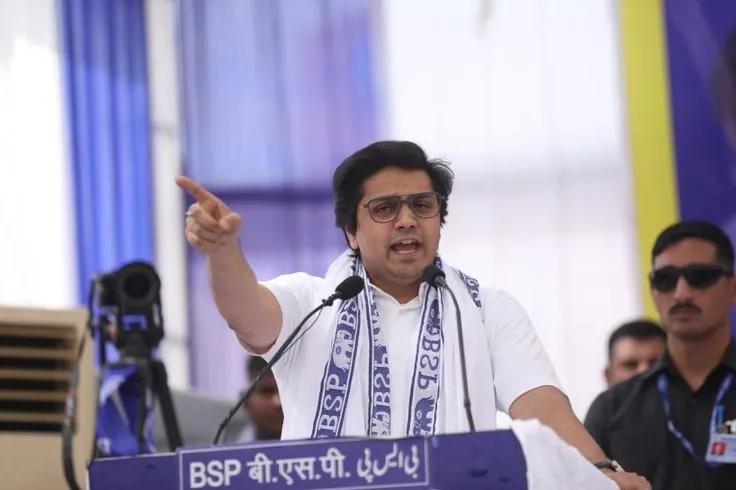
Other parties have been actively elevating younger leaders in an effort to connect with new voters. The BSP’s latest internal adjustment runs counter to that broader trend, at least for the moment. By emphasising maturity over generational change, Mayawati appears to prioritise control and caution over rapid youth outreach through her own family.
Implications for Party Organisation
Akash Anand will continue to function as a party worker according to the public statements. The distinction between ordinary participation and significant responsibility is important. It allows the BSP to retain his association while denying him the authority and visibility that previously accompanied national-level posts. Whether this arrangement remains stable or gives way to another re-elevation will depend on future assessments by the party leadership.
The emphasis on Kanshi Ram’s principles also serves an internal purpose. It frames the restriction not as a personal rebuke but as fidelity to the party’s founding ethos. At the same time, the practical effect is a further concentration of decision-making authority with Mayawati herself as the party navigates a challenging electoral landscape.
Questions of Succession and Stability
For a party whose fortunes have declined in recent election cycles, clarity about leadership continuity matters. The repeated changes in Akash Anand’s status have created an impression of uncertainty. Supporters who once saw him as the bridge to a younger generation of voters now confront a more limited role for him. Critics within and outside the party view the oscillations as evidence of unresolved tension between dynastic consideration and organisational discipline.
Mayawati’s public insistence that the party’s larger mission remains paramount is consistent with her long-standing style of centralised leadership. Yet the visibility of these family-related adjustments ensures that questions about the BSP’s future direction will persist. As the organisation prepares for the next round of elections, the gap between the need for energetic outreach and the current restraint on a once-prominent young face remains noticeable.
Looking Ahead
Akash Anand’s reduced responsibilities do not amount to an exit from the party. They do, however, mark another pause in a political career that has already seen sharp rises and falls. Mayawati has left open the possibility that greater maturity could eventually justify larger duties. Until that assessment changes, the BSP’s public face of youth leadership remains constrained.
The episode underscores the tight control Mayawati continues to exercise over the party’s hierarchy. In an era when many political organisations are experimenting with younger faces to broaden appeal, the BSP has chosen, for now, to keep its most prominent young relative in a deliberately limited role. How this decision affects the party’s ability to mobilise support in the coming electoral contests will become clearer in the months ahead.
Read more – Blessingread.com , pfptrends.com
