When Books Become Travel Guides
India has never really been short of beautiful places, but some destinations remain surprisingly quiet even when millions of people travel every year. Popular hill stations, beaches, forts, and cities dominate travel searches, while lesser-known locations often stay outside the usual holiday conversation. Sometimes, however, the best travel inspiration does not come from social media or expensive travel websites. It comes from books.
Indian literature has always carried strong connections with places, landscapes, communities, food, history, and everyday life. A novel can make a small town feel strangely familiar before you have ever visited it yourself. A travel memoir can turn an ordinary road into something worth exploring, while historical writing can make an old fort or neighbourhood suddenly feel much more interesting.
That is where the idea of a hidden travel destination in India becomes interesting, because books can introduce places differently from conventional tourism guides. They do not simply list attractions, hotel prices, or famous viewpoints. They give a place personality, which can sometimes make travellers curious enough to go there.
Cities That Feel Different On Paper
Some Indian cities become much more interesting when seen through literature because writers notice details that regular tourist guides often skip. Streets, old houses, railway stations, markets, rivers, local cafés, temples, and neighbourhoods can all become part of a larger picture.
Kolkata is perhaps one of the clearest examples of a city shaped strongly by books and writers. Its literary history is enormous, with generations of Bengali authors writing about its streets, people, politics, homes, and changing culture. A traveller who reads about Kolkata before visiting may notice completely different things while walking through the city.
Lucknow offers another fascinating example because its literary identity connects strongly with its history, language, food, architecture, and old-world culture. Reading about the city can make places such as its historic neighbourhoods and markets feel less like tourist attractions and more like pieces of a much larger story.
Then there is Varanasi, which has inspired countless writers, poets, photographers, and travellers over centuries. The city appears repeatedly in Indian literature because its atmosphere is difficult to describe through ordinary travel information alone. The ghats, narrow lanes, temples, riverfront, and daily rituals create an environment that feels completely different from conventional holiday destinations.
Small Towns With Bigger Stories
The most interesting discovery may actually be that books can push travellers toward smaller Indian destinations that rarely appear at the top of travel lists. These places may not have luxury resorts or famous Instagram viewpoints, but they can offer something more difficult to manufacture, which is a strong sense of place.
Think about towns connected with famous writers, poets, artists, or historical personalities. Their importance may not be immediately obvious when you arrive. A particular street, old house, railway route, marketplace, or riverside location might seem ordinary until you understand the story attached to it.
That changes the entire travel experience.
Instead of asking where the most popular attraction is, you start wondering why a writer chose that particular town as a setting. You notice architecture more carefully. You pay attention to local conversations and old neighbourhoods. Even a quiet afternoon can become interesting because you already have some context about the destination.
This is one reason literature inspired travel is becoming an appealing idea for travellers who are tired of visiting the same highly promoted places.
The Landscape Hidden Inside Stories
Books can also reveal landscapes that tourists often overlook. A mountain described through a novel may feel different from a mountain shown through hundreds of photographs. The words create atmosphere, and that atmosphere can influence how someone experiences the real location later.
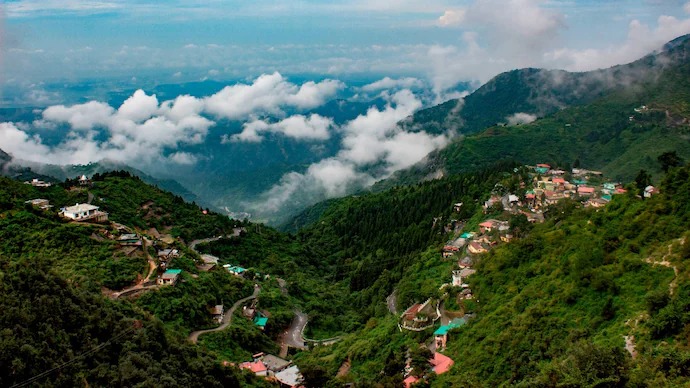
The Himalayan region provides plenty of examples because writers have long used mountains, forests, valleys, villages, and rivers as important parts of their stories. Places around Uttarakhand, Himachal Pradesh, Jammu and Kashmir, and the northeastern states have appeared in different forms across Indian writing.
Ruskin Bond’s association with Mussoorie and Landour is particularly important when discussing this connection between literature and travel. Readers who discover his writing often become curious about the landscapes, old roads, quiet houses, and mountain atmosphere connected with his world.
The destination becomes more than a location on a map. It becomes somewhere readers already know emotionally, even before they arrive.
Reading Before Booking A Trip
There is actually a practical advantage to choosing destinations through books. Travellers often search online using terms such as best places to visit, hidden places in India, or weekend destinations. Those searches can quickly become repetitive because popular recommendations keep appearing across different websites.
Books offer another starting point.
You can choose a novel set in a particular region, read a travel memoir about a state, explore historical writing about an old city, or simply follow an author’s connection with a particular landscape. From there, you can create your own destination list rather than copying the same recommendations seen everywhere.
This does not mean every literary location will be suitable for a holiday. Some places may have limited accommodation, difficult transportation, seasonal restrictions, or fewer conventional attractions. That is part of the appeal, but it also means basic planning remains necessary.
The book creates curiosity, while practical research decides whether the trip makes sense.
Why Quiet Destinations Feel Special
There is another reason book-inspired travel can feel refreshing. Many travellers are increasingly interested in slower experiences instead of rushing through several attractions in one weekend.
A smaller destination can support that kind of travel surprisingly well.
You might spend the morning walking through an old market, stop at a local tea shop, visit a historic building, read a few pages from the book that brought you there, and simply observe the surroundings. There may be no packed itinerary at all.
That sounds almost too simple in an age where travel content often focuses on making every trip look spectacular. Yet simple experiences can sometimes stay in memory longer than a crowded sightseeing schedule.
Books naturally encourage this slower approach because they make travellers interested in details rather than checklists.
India’s Literary Travel Map
India could easily have a much larger literary tourism map than it currently does. Places associated with writers, poets, translators, journalists, historians, and major literary movements could become meaningful cultural destinations.
Shimla, Kolkata, Varanasi, Lucknow, Allahabad or Prayagraj, Delhi, Mumbai, Mussoorie, Dehradun, Pondicherry, and several smaller towns all have strong connections with literature and storytelling in different ways.
The opportunity is not simply about attracting tourists. Literary tourism can also encourage preservation of old neighbourhoods, homes, libraries, archives, bookstores, and cultural spaces that might otherwise disappear quietly.
When a place becomes part of a reader’s imagination, visiting it can create a stronger emotional connection with local history.
That connection matters because tourism does not always have to be about sightseeing. Sometimes, understanding why a place mattered to someone else can be enough reason to visit.
Social Media Cannot Replace Every Story
Travel trends now move extremely quickly because social media can turn an unknown location into a crowded destination almost overnight. One viral video can change the character of a quiet spot within months.
Books work differently.
A destination discovered through literature usually grows slowly in someone’s imagination. There is no pressure to recreate a photograph perfectly or find the exact viewpoint shown online. The traveller arrives with curiosity rather than a checklist.
That can create a more personal form of slow travel in India, especially for people who enjoy reading and exploring culture at the same time.
It also encourages travellers to look beyond the obvious. Instead of asking which destination is trending this week, they can ask a much more interesting question: which place has a story worth discovering?
Your Next Trip Could Start On A Page
The biggest lesson from book-inspired travel is fairly simple. India does not need another list of only famous destinations because the country already has thousands of places with stories waiting to be explored.
A book can become the first step toward discovering those places. It can introduce a town, describe a landscape, explain a historical moment, or make an ordinary street feel unexpectedly meaningful. After that, the actual journey becomes personal.
For travellers searching for something beyond crowded tourist attractions, literary destinations offer a different route into India. The best part is that you do not necessarily need expensive planning to begin. Pick a book, find the place behind its pages, research the practical details, and see where the idea takes you.
Conclusion: Let Reading Shape Your Journey
India’s greatest travel discovery may not always be found through trending reels or popular destination lists, because some of the country’s most memorable places are hidden inside stories. Books can reveal smaller towns, historic cities, mountain landscapes, cultural neighbourhoods, and forgotten corners with remarkable depth. They encourage travellers to slow down and notice details that ordinary sightseeing can easily miss. For anyone searching for unique travel experiences in India, literature can provide an unexpected and deeply personal starting point. Pick a book connected with a place you have never visited, research the destination carefully, and let the story become the beginning of your next journey.