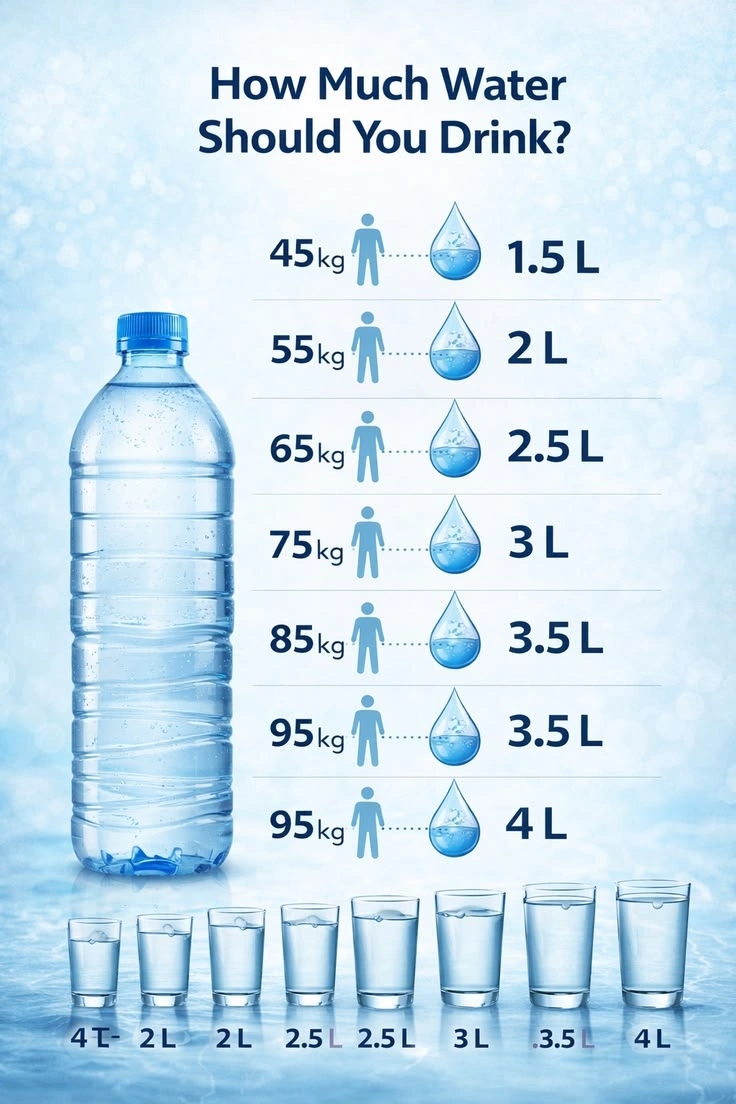

Water is the most essential nutrient for human survival, yet it is often overlooked in daily health discussions. Proper hydration affects every system in the body — from regulating temperature and transporting nutrients to supporting cognitive function and joint health. In 2026, with rising awareness of wellness and preventive health, understanding your personal water needs has become more important than ever. This comprehensive guide explains how much water you should drink daily, the factors that influence it, and practical strategies to maintain optimal hydration.
How Much Water Do You Actually Need?
The common advice of drinking “8 glasses of water a day” (about 2 liters) is a simplified guideline that doesn’t account for individual differences. According to established health recommendations, adult men should aim for approximately 3.7 liters (around 13 cups) of total fluid intake daily, while women should target 2.7 liters (about 9 cups). This includes water from all sources — plain drinking water, beverages, and food.
However, these are general averages. Your actual requirement depends on multiple personal factors. Athletes, people living in hot climates, and those who are physically active may need significantly more — sometimes up to 4–5 liters daily. Pregnant and breastfeeding women also require additional fluids to support increased blood volume and milk production.
Factors That Influence Your Daily Water Needs
Several variables determine how much water your body requires:
Body Size and Composition
Larger individuals and those with more muscle mass need more water. Muscle tissue holds more water than fat, so active people with higher muscle percentage have elevated requirements.
Physical Activity Level
Exercise increases fluid loss through sweat. A person who works out for 45–60 minutes daily should add 0.5–1 liter of water to their baseline intake. Intense training or outdoor activities in heat can double this amount.
Climate and Environment
Hot, humid, or high-altitude environments accelerate fluid loss. In India’s summer months, people often need 1–2 extra liters daily. Air-conditioned offices can also cause subtle dehydration by reducing humidity.
Health Conditions
Certain conditions like fever, diarrhea, vomiting, or kidney stones increase water needs. People with diabetes or heart conditions should consult doctors for personalized guidelines. Medications such as diuretics also affect hydration levels.
Diet and Lifestyle
High-protein or high-fiber diets require more water for digestion. Caffeine and alcohol act as mild diuretics, increasing fluid requirements. Breastfeeding mothers need an additional 1 liter daily.
Benefits of Proper Hydration
Staying well-hydrated delivers numerous health advantages:
-
Improved Physical Performance: Even mild dehydration (1–2% body weight loss) can reduce endurance, strength, and coordination. Proper hydration maintains optimal muscle function and prevents cramps.
-
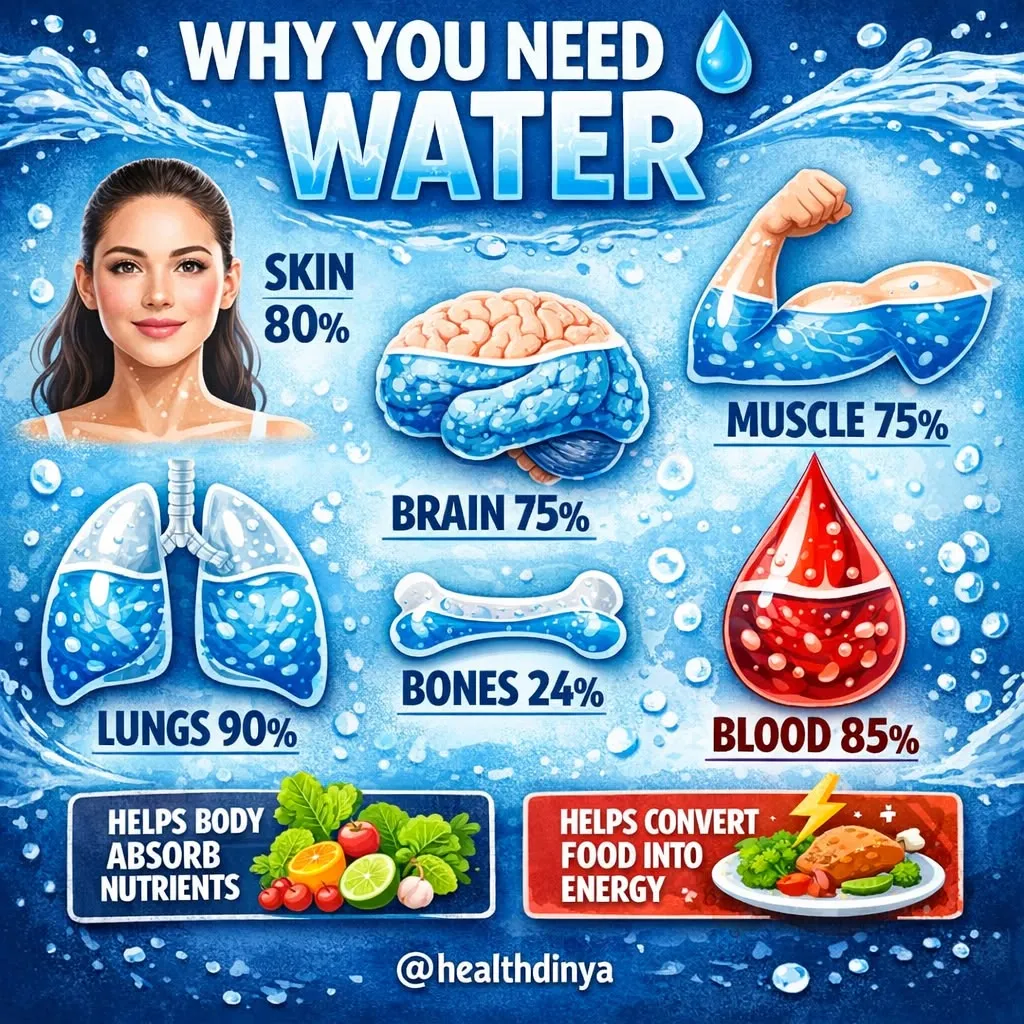
Better Cognitive Function: The brain is highly sensitive to hydration status. Adequate water intake improves concentration, memory, mood, and reaction time.
-
Digestive Health: Water helps prevent constipation and supports nutrient absorption. It also aids kidney function in filtering waste.
-
Skin Health: Proper hydration contributes to skin elasticity and can reduce the appearance of dryness and wrinkles.
-
Weight Management: Drinking water before meals can reduce appetite and support healthy metabolism.
-
Temperature Regulation: Water is essential for sweating and cooling the body during physical activity or hot weather.
Signs You’re Not Drinking Enough Water
Recognizing dehydration early is crucial. Common symptoms include:
-
Persistent thirst and dry mouth
-
Dark yellow or amber-colored urine
-
Fatigue and headaches
-
Dizziness or lightheadedness
-
Dry skin and reduced elasticity
-
Difficulty concentrating or irritability
-
Muscle cramps and joint pain
Severe dehydration can cause rapid heartbeat, confusion, and requires immediate medical attention. Urine color remains one of the simplest self-check methods — aim for pale yellow.
Practical Strategies to Meet Your Daily Water Goal
Meeting hydration targets doesn’t have to be complicated. Here are effective approaches:
Set a Personalized Target
Calculate your needs based on body weight (30–40 ml per kg is a common guideline). A 70 kg person would aim for roughly 2.1–2.8 liters from fluids alone.
Create Daily Habits:
-
Start your day with 500 ml of water upon waking.
-
Carry a reusable bottle and set hourly reminders.
-
Drink a glass of water with every meal.
-
Use apps or smart bottles that track intake.
-
Flavor water naturally with lemon, cucumber, or mint to make it more appealing.
Incorporate Water-Rich Foods:
-
Eat plenty of fruits and vegetables like watermelon, cucumber, oranges, and tomatoes.
-
Include soups, smoothies, and herbal teas in your diet.
Adjust for Activity:
-
Drink 400–600 ml of water 2 hours before exercise.
-
Sip 150–300 ml every 15–20 minutes during activity.
-
Rehydrate properly after workouts.
Special Considerations for Different Groups
Children and Teenagers: Encourage regular drinking through fun bottles and flavored options. Their needs vary significantly with growth spurts and sports.
Pregnant and Breastfeeding Women: Increase intake by 300–700 ml daily. Proper hydration supports fetal development and milk production.
Older Adults: Thirst sensation decreases with age, making dehydration more common. Set regular drinking schedules rather than relying on thirst.
Athletes and Fitness Enthusiasts: Use electrolyte-enhanced water during intense sessions longer than one hour.
Common Myths About Water Intake
-
Myth: You must drink exactly 8 glasses daily. Reality: Needs vary widely based on individual factors.
-
Myth: All fluids count equally toward hydration. Reality: Water is best. Sugary drinks and excessive caffeine can have dehydrating effects.
-
Myth: Clear urine means perfect hydration. Reality: Very clear urine may indicate overhydration in some cases. Pale yellow is the ideal target.
Making Hydration a Sustainable Habit
The most successful approach is turning hydration into an automatic daily behavior. Link drinking water to existing habits — after waking up, before meals, or during work breaks. Keep water visible and accessible. Track your intake for 2–3 weeks until it becomes natural.
Remember that balance is key. While adequate hydration is vital, overhydration (water intoxication) is rare but possible if someone drinks excessive amounts in a short time. Listen to your body’s signals and adjust accordingly.
Proper daily water intake is one of the simplest yet most powerful steps you can take for better health. By understanding your personal needs and implementing practical strategies, you can enjoy improved energy, better focus, enhanced physical performance, and overall wellbeing. Small, consistent efforts in staying hydrated create lasting positive effects on both body and mind. Start today by assessing your current habits and making one small improvement — your body will thank you for it.
Read more – trendiopr.com